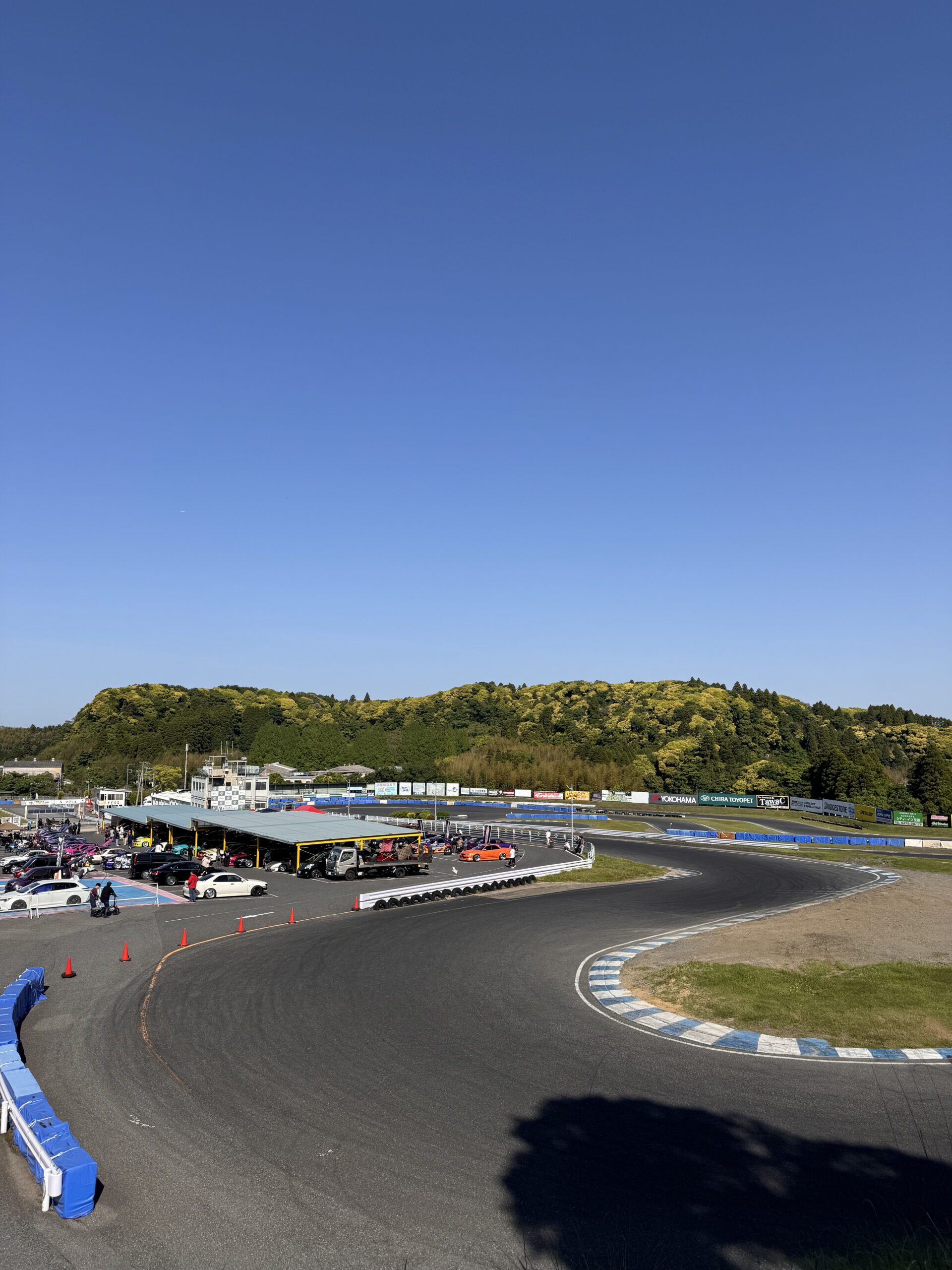
If you want to watch drifting in Japan, Mobara Circuit is where you go. Not because it’s the biggest or most famous circuit in the country — but because of how close you get to the action.
I’ve been coming here since I was a kid. Here’s what you need to know.
Why Mobara Is Different
Most circuits keep spectators at a distance. Mobara doesn’t.
The viewing areas sit right on the edge of the track. When a car comes through a corner sideways, you’re not watching it from across a field — you’re close enough to feel the sound in your chest and catch the smell of tire smoke in the air. For anyone who has only ever watched drifting on a screen, this changes everything.
The best spot in the venue is the final corner. Position yourself there and you’ll see cars coming out of the last bend at full angle, smoke pouring off the rear tires, before they straighten up down the front straight. It’s the most concentrated moment of any drift run, and at Mobara you’re watching it from a few meters away.
That proximity is what separates Mobara from every other circuit near Tokyo.
How a Event Day Runs
Doors open and cars are on track by around 9:00 AM. The day wraps up around 2:00 PM, so it’s compact — you’re not committing to a full day from dawn to dusk.
Arrive early. The final corner fills up as the day goes on, and you want to claim your spot before the crowd settles in.
Events to Know
Chiba Damashi is the event to target if you’re planning a visit around a specific date. Held once a year at Mobara, it’s one of the biggest grassroots drift events in the Kanto region. Drivers and spectators come from across Japan, the level of driving is high, and the atmosphere is unlike a regular event day. For a first-time visitor, this is the one. Check the Chiba Damashi official site for dates and details — and read our full Chiba Damashi guide for what to expect on the day.
Beyond Chiba Damashi, Bari Drift (バリドリ) is another event series that runs at Mobara. The schedule varies by year, so check the Mobara Circuit official site for the current calendar.
One thing to be aware of: food stalls and vendors depend on the event. Chiba Damashi will have more on-site than a regular event day. The circuit has a cafeteria, so you won’t go hungry either way — but if you’re coming for a smaller event, don’t count on a full lineup of food trucks outside.
What to Expect in the Crowd
Mobara draws a local crowd. Foreign visitors are rare — which, from a certain angle, makes it more interesting. You’re not at a tourist-friendly showcase event. You’re at a circuit where the people around you have been coming for years, know the drivers, and care deeply about what’s happening on track.
That’s the real value of Mobara for a foreign visitor. You’re stepping into something genuine.
Getting There
Mobara Circuit is in Chiba Prefecture, roughly 60 to 90 minutes from central Tokyo by car depending on traffic. Car is the only realistic option — there is no direct public transport to the circuit.
Parking is available on-site. On a major event day like Chiba Damashi, expect a moderate number of cars but nothing unmanageable. Arrive early and you’ll have no issues.
Tickets and Entry
No advance tickets required. Pay at the entrance on the day. Show up, pay, walk in.
Quick Info
Location: Mobara Circuit, Chiba Prefecture
Access: Car only
Parking: On-site, moderate capacity
Event hours: Approximately 9:00 AM – 2:00 PM
Best viewing spot: Final corner
Tickets: Pay at entrance, no advance purchase needed
Key events: Chiba Damashi (annual), Bari Drift
Foreign visitors: Rare — you’ll be one of very few
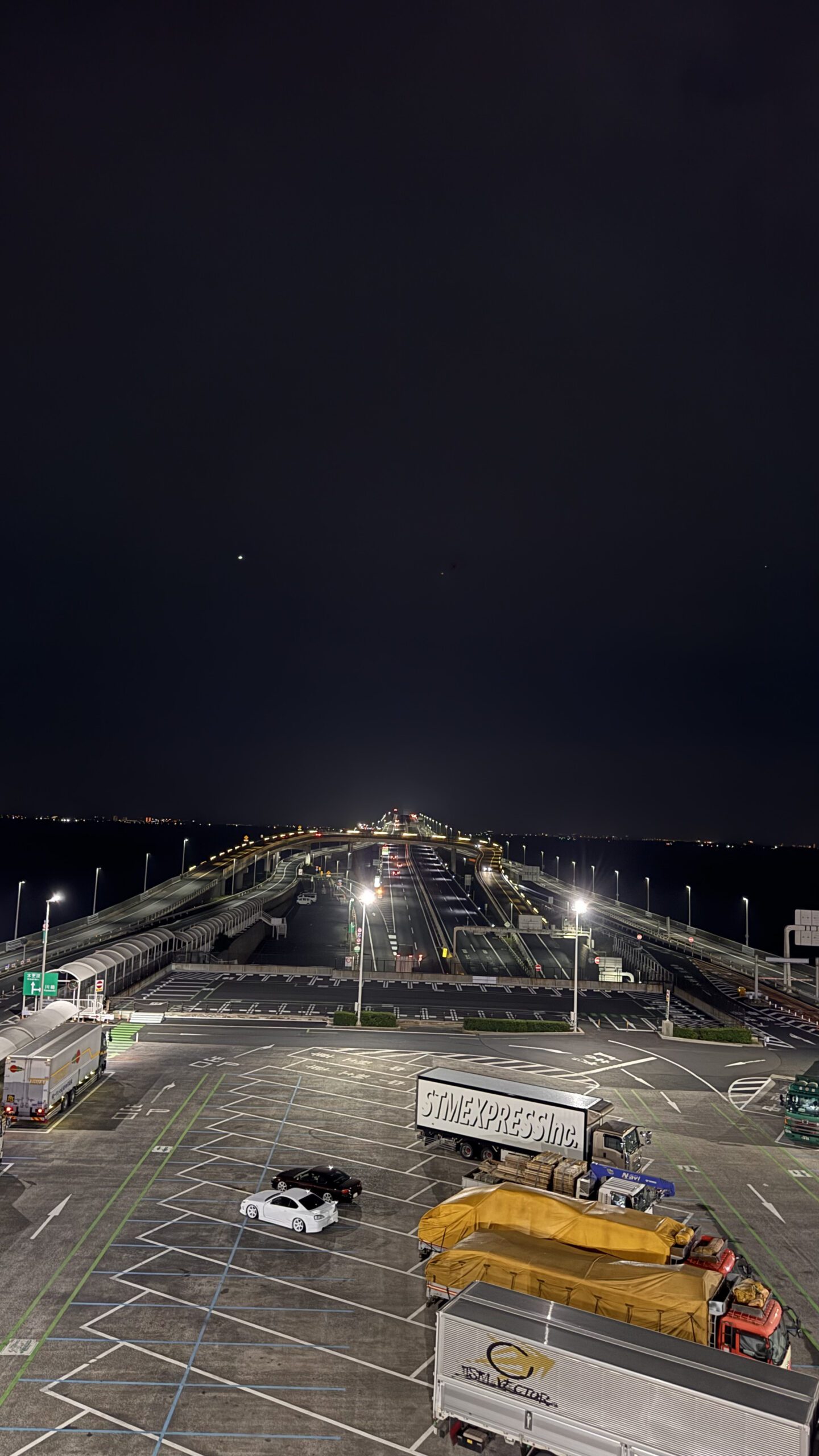
If Daikoku is Tokyo’s most famous car meet, Umihotaru is its most dramatic. Built on an artificial island in the middle of Tokyo Bay, this highway rest stop doubles as one of Japan’s best JDM gathering spots — and the setting alone makes it unlike anywhere else in the world.
I’ve been out here late on a Saturday night. Here’s what you need to know.
What Makes Umihotaru Different
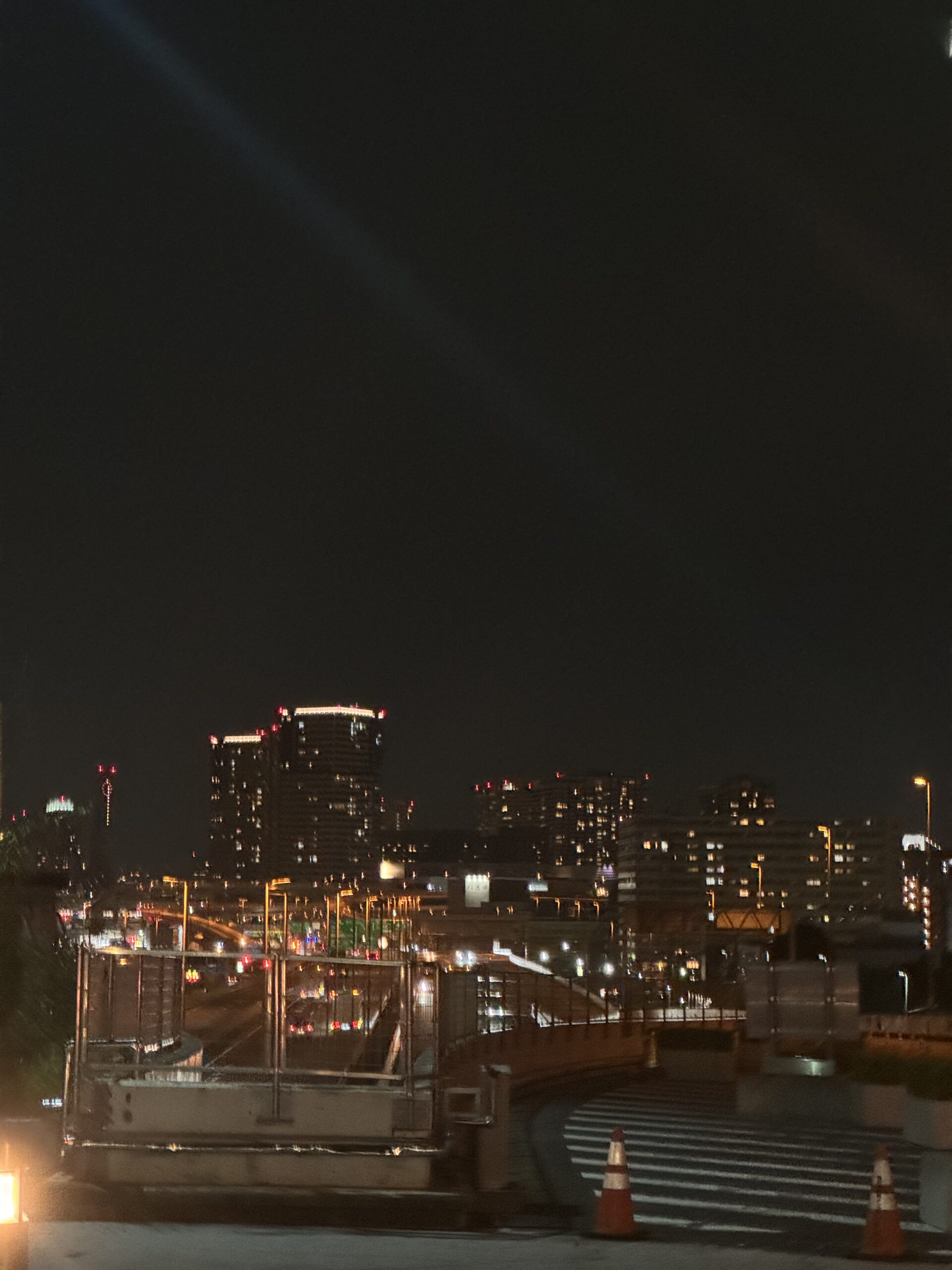
Umihotaru Parking Area sits in the middle of Tokyo Bay. Not near the water — on it. It’s a man-made island roughly halfway along the Tokyo Bay Aqua-Line, a combined tunnel-and-bridge expressway connecting Kanagawa and Chiba prefectures.
There is nowhere else like this. A highway rest stop surrounded by ocean on all sides, with the glow of the city visible in the distance. On a clear night, the views across the bay are genuinely stunning.
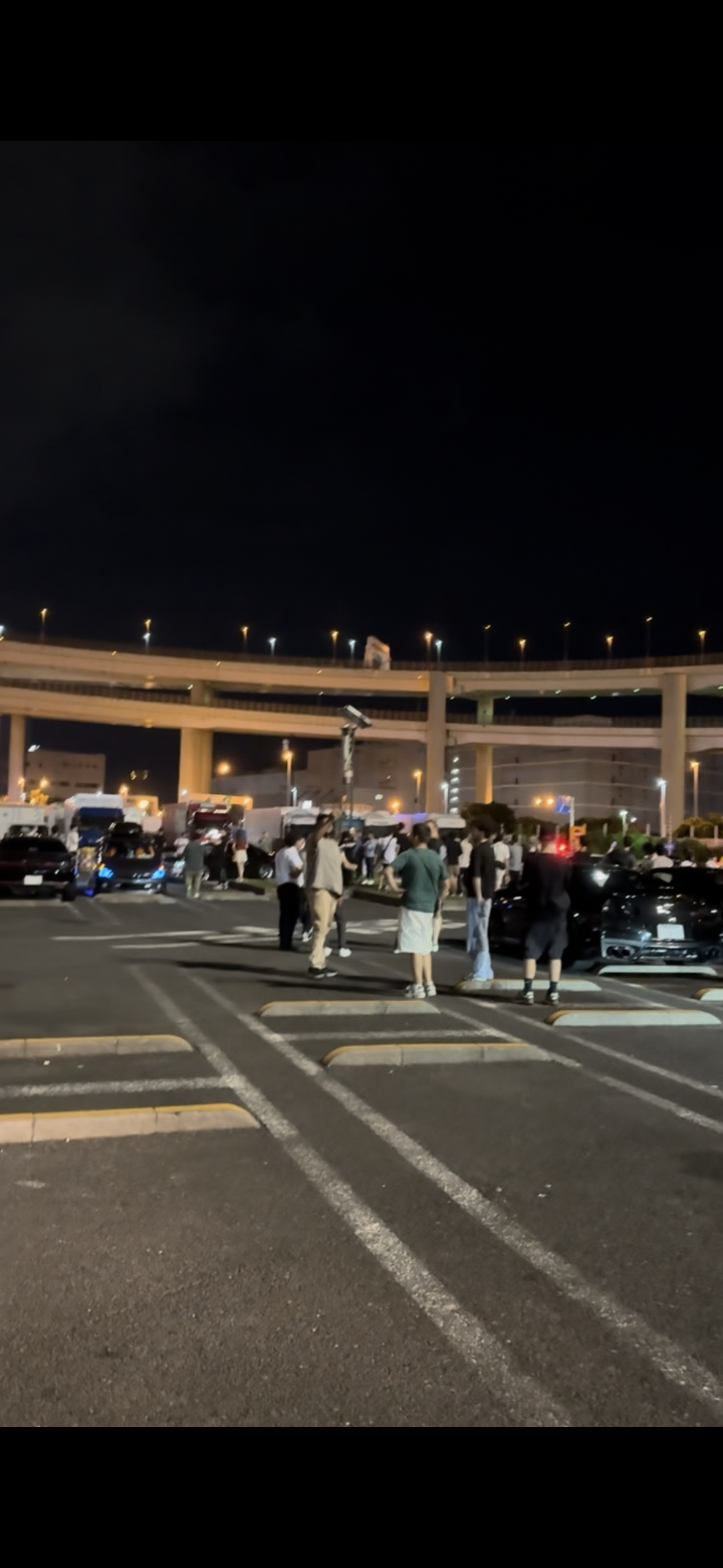
Now add a few hundred JDM cars parked up under those lights. That’s Umihotaru on a good Saturday night.
The Cars
The scene here is JDM-focused. Unlike Daikoku’s anything-goes mix of Italian exotics and supercars alongside domestic builds, Umihotaru tends to draw the JDM crowd — which, depending on what you’re there for, is exactly the point.
The scale is comparable to Daikoku. On a busy night, you’re not looking at a handful of cars — you’re looking at a proper gathering spread across the lot.
One Thing to Know: The Truck Parking Area
This is important and you won’t find it in most guides.
When a JDM-specific event or organized meet is happening at Umihotaru, the cars don’t always gather in the main parking area. They move to the truck parking section. If you pull into the main lot and wonder where everyone went, that’s your answer. Walk over to the truck area.
Getting There
Umihotaru is only accessible by car via the Tokyo Bay Aqua-Line. There is no train, no bus, no other way in.
From central Tokyo, take the expressway to the Bayshore Route (湾岸線), then onto the Aqua-Line. Umihotaru is the rest stop roughly in the middle of the crossing. You cannot miss it — it’s the only stop on the route.
Drivers coming from Chiba also use the Aqua-Line from the opposite direction, so the lot draws from both sides of the bay.
Parking is free. It’s a highway PA — no extra fees beyond your expressway toll.
When to Go
Saturday night, around 10:00 PM. That’s when things are properly going.
For many regulars, Umihotaru is the second stop of the night. The typical flow: start at Daikoku PA in Yokohama, stay until the lot closes, then head to Umihotaru to keep the night going. If you’re already at Daikoku when it shuts down, this is the natural next move — and you’ll find plenty of people making the same drive.
Earlier in the evening the lot fills up with regular travelers and tourists taking in the view. By the time you arrive around 10:00 PM, the balance has shifted and the car crowd takes over.
Closures — Read This First
Umihotaru shuts down, and it happens regularly.
The pattern to know: when Daikoku closes on a Saturday night, Umihotaru often closes at the same time. Both lots fill beyond capacity on busy weekends, and management shuts them to new traffic simultaneously.
Before you get on the Aqua-Line, check the electronic signboards at the expressway entrance. Closure information is displayed there in real time. If the sign shows Umihotaru is closed, it means the lot is full and you won’t be getting in — save yourself the toll and turn around.
Don’t skip this step. The Aqua-Line toll is not cheap, and there’s no reason to pay it for a closed PA.
The short version: don’t touch cars, ask before you photograph, and talk to people. The Umihotaru crowd is the same community you’ll find at Daikoku — respectful, passionate about their cars, and more open to conversation than you might expect.
Quick Info
Location: Umihotaru PA, Tokyo Bay Aqua-Line, midpoint between Kanagawa and Chiba
Access: Car only via the Tokyo Bay Aqua-Line (湾岸線 → アクアライン)
Best night: Saturday
Best arrival time: Around 10:00 PM
Cost: Free parking. Standard expressway tolls apply.
Closure check: Look for the electronic signboards at the expressway entrance before you get on
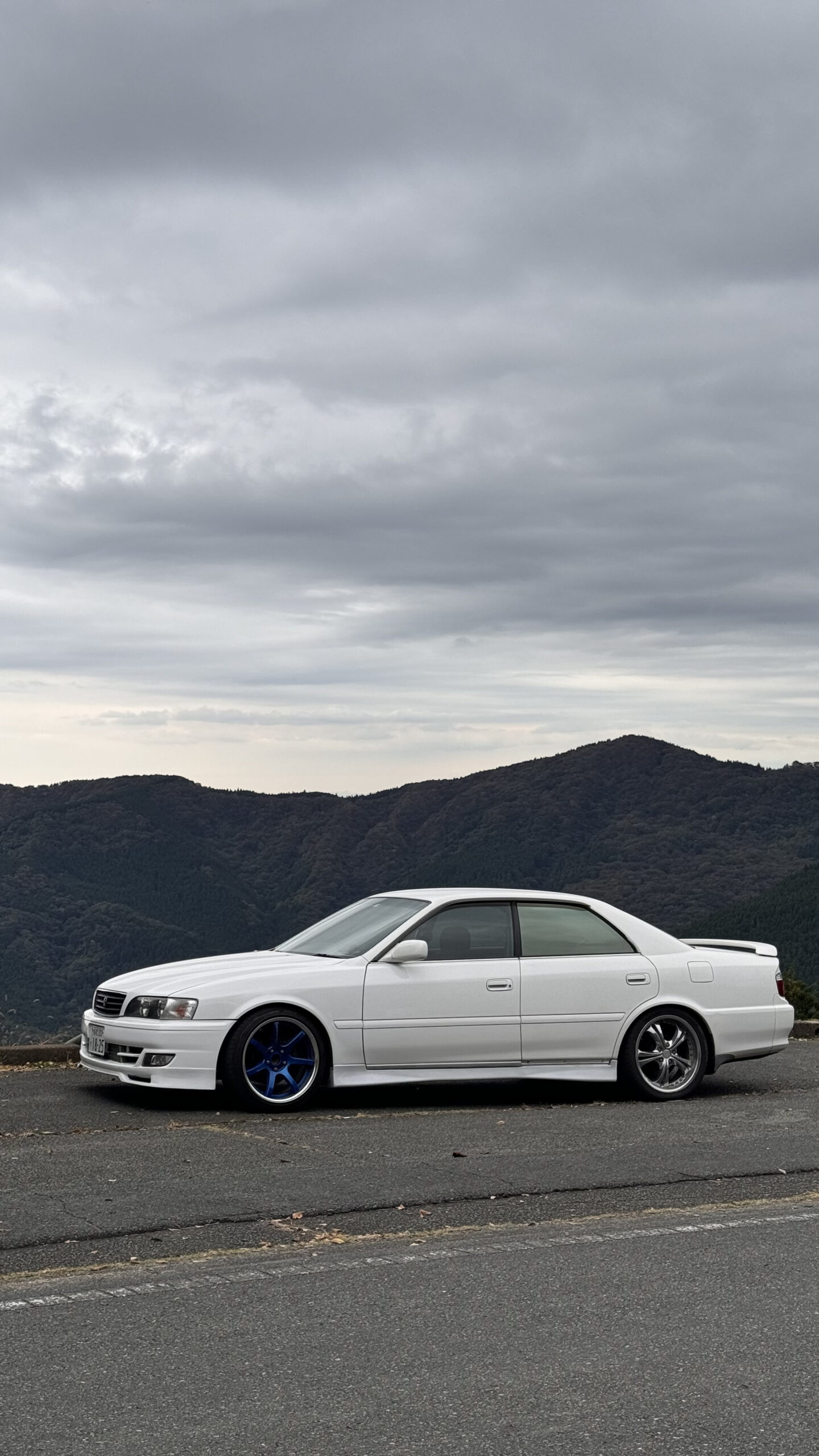
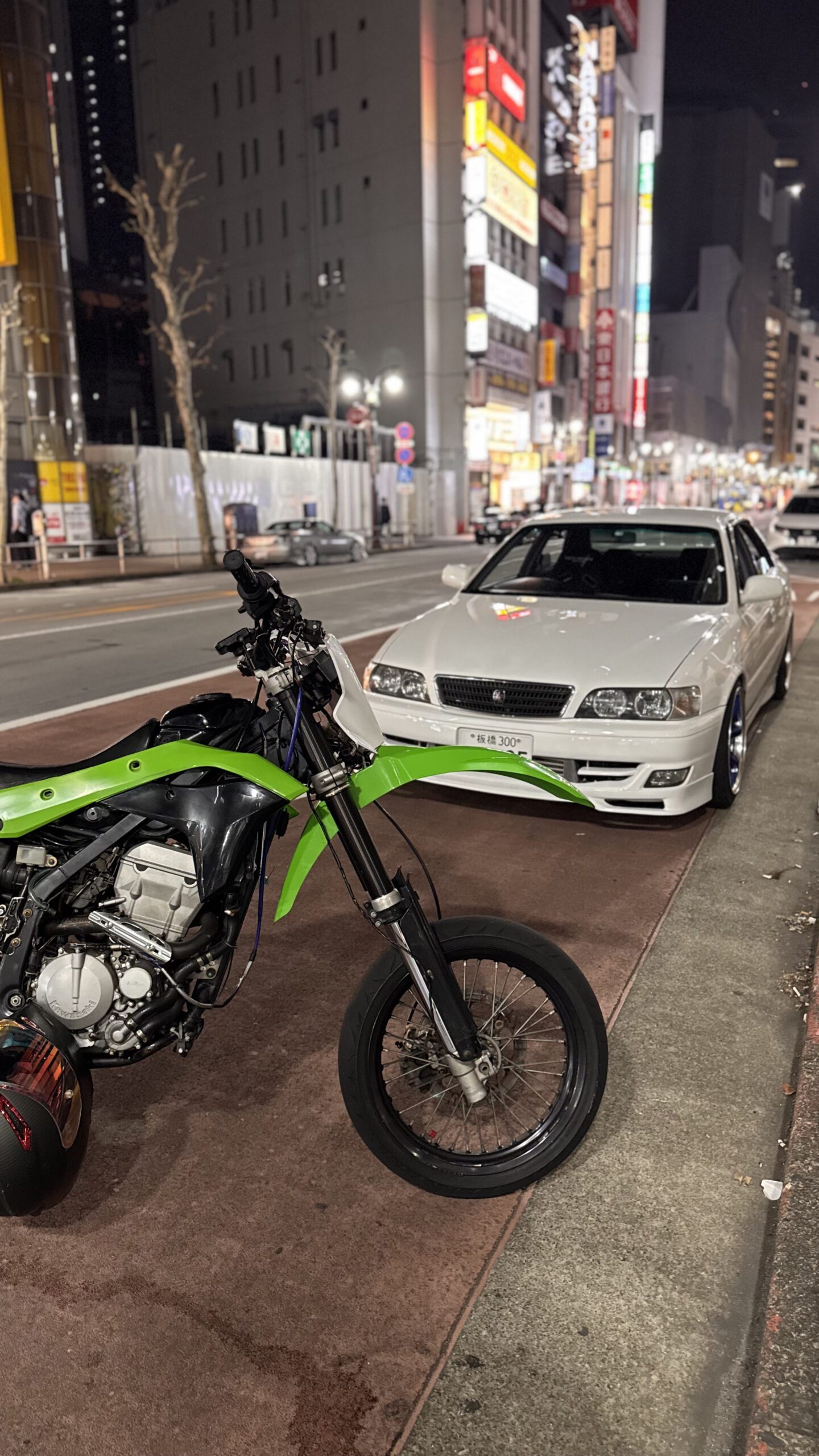
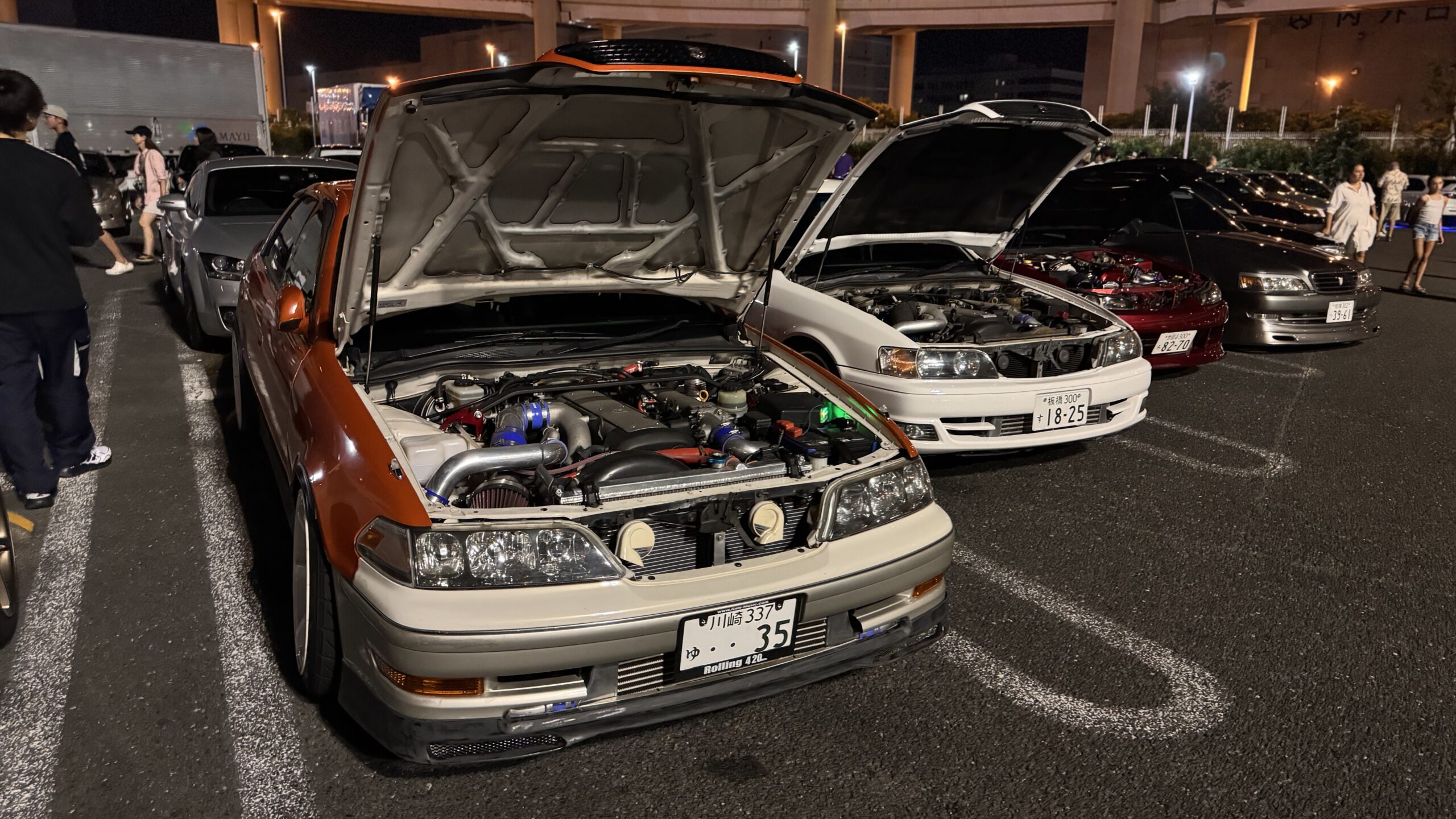
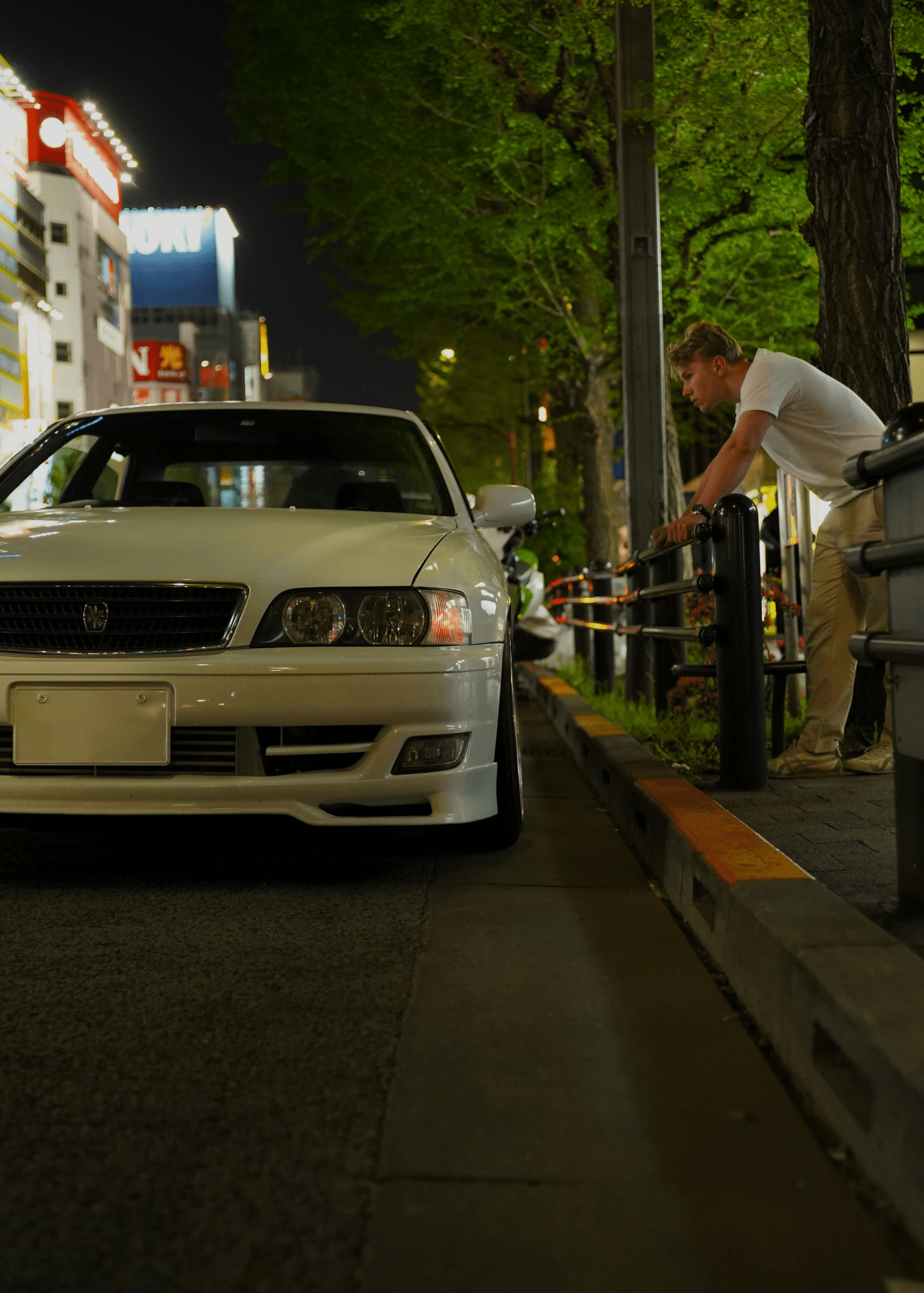
I’m 24. I work a regular office job. And I drive a 2000 JZX100 Chaser with a swapped turbo engine and a 5-speed manual through the streets of Tokyo every day.
This is what that’s actually like.
Why This Car
I didn’t choose the 1JZ. The 1JZ chose me.
Growing up, my family had a JZX110 for about twenty years. That car took me everywhere — and somewhere along the way, watching drift events from the back seat, I fell completely in love with that engine. The sound, the torque, the way it pulls. When the time came to buy my own car, I wasn’t looking for anything else. I found my Chaser and that was it.
Mine is a Tourer S on paper, but the previous owner had already swapped in a turbo engine and a 5-speed manual — basically a Tourer V in everything that matters. Everything else was stock when I got it.
What I’ve Spent Money On
The biggest single hit was the differential. The Tourer S and Tourer V have very different diff setups, and swapping it out properly isn’t cheap. But I wanted to drift, so that’s where the money went.
I can drift now. That chapter is done. The next chapter is making it look the part.
Monthly costs, roughly:
Parking: ¥17,500
Insurance: ¥10,000
Fuel: ¥20,000
Car inspection (shaken): ¥100,000 every two years — budget accordingly
Driving in Tokyo
The expressway is everything. Blasting through one of the world’s great cities in a machine that was built to do exactly this — there’s nothing like it. The 1JZ doesn’t care that it’s 2026. Neither do I.
The daily reality is less romantic. Manual transmission in Tokyo traffic is genuinely annoying. Stop-and-go on the expressway on-ramps, narrow parking structures, summer heat. Nobody tells you this part.
And the car is over 20 years old. Even sitting still it finds new ways to need attention. I’ve learned to just keep talking to it. Don’t break. Not today.
How People React
Japanese reactions: 90% bad, 10% incredible.
The 10% is worth it. When another enthusiast walks over, looks at the engine bay, and just nods — that’s the whole thing right there.
The foreign reaction is completely different. Tourists and foreign car fans who see the car treat it like a piece of art. That’s not an exaggeration. JDM culture has spread to the point where a guy from Poland or the US or Australia sees this car and genuinely feels something. That never stops being surreal and gratifying.
The Scene, From the Inside
I go to Daikoku, Tatsumi, Shinonome. I talk to people. And over time, something has become clear to me: foreign car fans aren’t just curious — they’re invested. They’ve grown up with Initial D, with Gran Turismo, with YouTube build videos. JDM culture isn’t just cars to them. It’s art. It’s identity.
That’s why I built JDM Pilgrim. I want to be part of that. I want to push it forward.
Parts and Wrenching
For used parts: Up Garage and Yahoo Auctions are the go-to. Beyond that, it’s about who you know. The best shops aren’t found on Google — they’re found through introductions. Make friends in the scene first.
On the legal side: I run an ECV (Exhaust Control Valve) to manage sound levels when needed. Know the rules, know your car, and know when to keep it quiet.
If You Want One
My honest advice to any foreigner thinking about buying a JZX100 in Japan: go in ready to refresh everything. Rubber, fluids, seals — assume it all needs to be done. These cars are old and they will find ways to remind you of that. But if you’re serious about it, nothing comes close.
1JZ is super duper lit. That’s the most honest thing I can tell you.
JDM Pilgrim is written by a Tokyo-based JZX100 owner who grew up in Japan’s car scene. All spot guides and cultural content come from years of firsthand experience — not from a travel blog.
If you’re coming to Japan for the cars, you already know the names — Daikoku, Tatsumi, Odaiba. But knowing the names and knowing when to show up are two completely different things. This map has every spot worth visiting near Tokyo, with honest ratings and the exact times to be there.
The Spots
Daikoku PA ⭐⭐⭐⭐⭐
Best time: Fri–Sun from 7PM, or Sat–Sun from 3PM
Daikoku is the one. If you’re a car person and you only have one night in Japan, this is where you go — no debate. The scale, the variety, the energy — nothing else comes close.
Most people come here to shop, and the shop is legitimately incredible — but the real move is staying for the parking lot. All-genre, all the time. By 5PM you’ll start seeing builds roll in. By 9PM on weekends, the street car crowd shows up and things get interesting.
This is one of the most underrated spots in Tokyo for foreign car fans. It’s accessible by train, which makes it an easy add to any Tokyo itinerary.
This one skews toward the high end. Supercars are a regular sighting here, which makes it a different kind of energy compared to the PA scene. Worth it if you want to see serious money on wheels in a surprisingly relaxed setting. Check the map above for the exact location.
Akiba Spot ⭐⭐⭐⭐
Best time: Around 8PM
Akihabara’s car scene is a mix of street cars and itasha — the otaku-culture builds covered in anime wraps that you really can’t unsee. It’s a uniquely Tokyo crossover. One thing to know going in: police presence here is high. That’s part of the experience, but keep that in mind and read up on how to handle encounters with Japanese police as a foreigner → before you go.
Shibuya Carjack ⭐⭐⭐
Best time: Saturday from 9PM
Shibuya Carjack is more event than meet — it runs most Saturdays and brings a younger, louder energy to the scene. Not the spot for quiet appreciation, but if you want to feel the pulse of Tokyo’s street car culture, this delivers.
If Daikoku is the party, Tatsumi is the actual scene. Less curated, more raw. The guys here at 2AM aren’t posing for tourists — that’s either a plus or a minus depending on what you’re looking for.
Filling up in Japan is straightforward once you know the system. However, get it wrong and you could end up with the wrong fuel in your rental car, cash stuck in a machine you don’t understand, or a bill that’s 30% higher than it needed to be. This guide covers everything so none of that happens to you.
Self-Service vs Full-Service
Most gas stations in Japan are self-service (セルフ). Full-service stations exist but are less common and consistently more expensive. Unless you specifically need help, use self-service — it’s cheaper and faster.
Personal take: Full-service is rarely worth the premium. Stick to self-service.
Fuel Types — Get This Right First
Japan has three fuel types. Putting the wrong one in your car ranges from inconvenient to catastrophic.
Japanese
English
Nozzle label
Risk if wrong
レギュラー
Regular (91 octane)
レギュラー
Low — most cars run fine
ハイオク
Premium / High-octane (98 octane)
ハイオク
Knocking and rough running, but won’t destroy the engine
軽油
Diesel
軽油
Engine will stop running — call roadside assistance immediately
The diesel mistake is the serious one. If you accidentally pump diesel into a petrol car, do not start the engine. Call the rental company’s emergency line immediately.
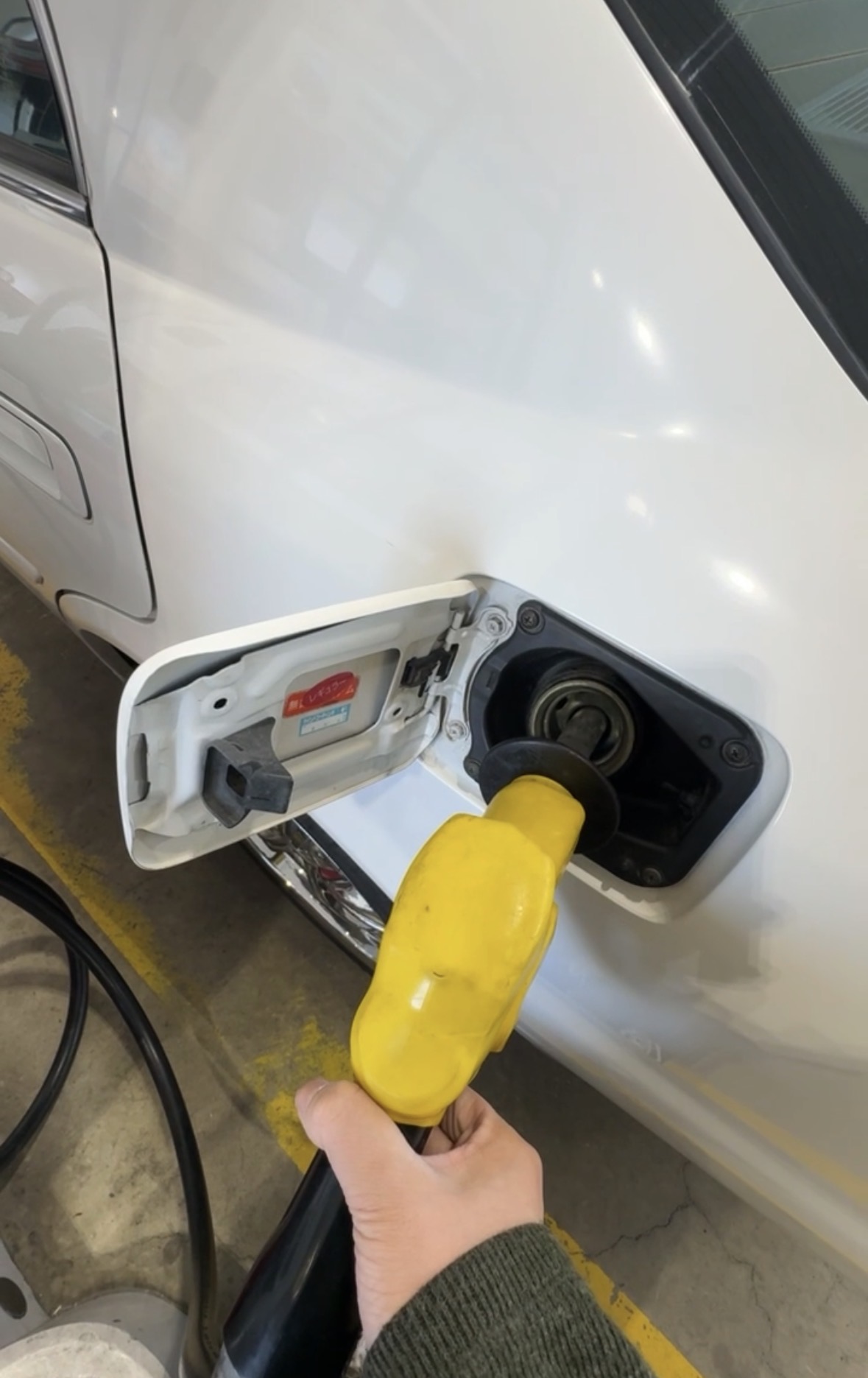
How to know which fuel your rental car takes: Check the fuel cap or the inside of the fuel filler door — there’s almost always a sticker. It will say レギュラー or ハイオク. When in doubt, ask at the counter before pumping.
For JDM sports cars: It varies by model. Check before you drive, not at the pump.
Step-by-Step: How to Use a Japanese Self-Service Station
Step 1: Change the Language
Most modern self-service machines allow you to switch to English. Look for a language button on the screen when you approach — tap it before doing anything else.
Step 2: Touch the Static Electricity Pad
Before touching the nozzle, press the 静電気除去シート (static electricity removal pad) — it’s usually a small sheet on the pump. A brief touch is enough. This is a safety step and it’s standard practice in Japan.
Step 3: Select Your Payment Method
Choose cash or card on the screen.
Credit card: Insert your card first. International cards generally work fine.
Cash: Insert your bills upfront. You pay before pumping, and collect change from a separate machine after — not from the pump itself. If you can’t find where to collect your change, ask a staff member.
Step 4: Select Your Fuel Type
The screen will show レギュラー、ハイオク、軽油. Select the correct one. Take note of which colour the machine highlights for your selection — nozzle colours vary by station and company, so the screen colour is your most reliable reference. The nozzles themselves are labelled, but sometimes in Japanese only.
Step 5: Select the Amount
Choose 満タン (mantank) for a full tank — this is what you want when returning a rental car. Alternatively, you can select a specific yen amount or litre amount.
Step 6: Pump the Fuel
Take the nozzle, insert it fully into the fuel filler, and squeeze the handle. Hold it or lock it in place — the nozzle will automatically stop when the tank is full. Do not force more fuel in after it stops.
Step 7: Replace the Nozzle and Collect Your Change
Return the nozzle to the pump. If you paid cash, go to the change machine (separate unit, usually nearby) to collect your change. Keep the receipt if you need it for the rental car return.
Full-Service Stations — What to Expect
If you pull into a full-service station, an attendant will approach your car. The exchange is short:
They’ll ask your fuel type — say レギュラー or ハイオク, or show them the sticker on the fuel cap
They’ll ask how much — say 満タンで (mantanku de) for full tank
At the end, they’ll ask your payment method — カードで (ka-do de) for card, 現金で (genkin de) for cash
Full-service costs more than self-service. There’s no meaningful benefit for most drivers.
Where to Fill Up — Price Tips
Avoid filling up in central Tokyo. Fuel prices in the city centre are noticeably higher than suburban or highway-adjacent stations. If you’re heading out on a Wangan run, fill up before you get into the city or on your way out.
Highway SA stations charge 20–30% more than regular stations. Only use them if you’re running low with no alternative.
Best strategy: Fill up in suburban areas on your way to wherever you’re going, and return the tank full from a station outside the city centre before dropping off the rental.
Car Wash
Most Japanese gas stations have an automatic car wash machine. The process works the same way as the fuel pump — select your wash type on the screen, pay, drive in, and follow the instructions. It’s a surprisingly satisfying experience and costs a few hundred yen for a basic wash.
Quick Reference
Thing to know
Detail
Language
Switch to English on the screen first
Static pad
Touch it briefly before handling the nozzle
Diesel mistake
Do NOT start the engine — call rental assistance
Full tank
Select 満タン on screen
Auto-stop
Nozzle stops automatically when full
Cash change
Collected from a separate machine, not the pump
Card
International cards accepted
Highway stations
20–30% more expensive — avoid if possible
Central Tokyo
Higher prices — fill up outside the city
Useful Japanese Phrases
Phrase
Pronunciation
Meaning
満タンで
Mantanku de
Full tank please
レギュラーで
Regyuraa de
Regular fuel
ハイオクで
Hai-oku de
Premium fuel
カードで
Kaado de
By card
現金で
Genkin de
By cash
いくらですか?
Ikura desu ka
How much is it?
The Bottom Line
Japanese gas stations are clean, fast, and well-organised. The self-service machines look intimidating at first, but once you’ve done it once it becomes automatic. Switch the language to English, check your fuel type before you pump, and never put diesel in a petrol car.
Renting a car for your trip? Read our complete rental car guide before you pick up the keys.
Let’s get this out of the way first: Japanese police are not your enemy. They’re generally polite, professional, and surprisingly relaxed about the whole thing — especially with foreigners. However, there are a few things that can turn a routine interaction into a very long night, and this guide exists so you don’t accidentally make those mistakes.
One personal data point: the author of this site was stopped four times in a single day in Shibuya. By the fourth stop, the officers already knew the name and face. Everything was fine. That’s the level of drama we’re talking about.
Japan is an extraordinarily homogeneous country. Outside of tourist areas, seeing a foreign face is genuinely unusual — and unusual things attract attention, including from police.
If you’re at Daikoku PA or Shibuya Carjack, you’re in a crowd and largely anonymous. However, if you’re walking through a residential neighborhood, parked in an industrial area late at night, or anywhere that isn’t an obvious tourist destination, the probability of a 職務質問 (shokumu shitsumon) — a police stop and questioning — goes up significantly. In some areas, foreign visitors get stopped roughly once a week.
This isn’t hostility. It’s curiosity combined with procedure. The important thing is knowing how to handle it.
What Happens When Police Stop You
On Foot
An officer will approach, show their badge, and ask some questions. They want to know who you are, where you’re from, and what you’re doing. That’s it.
While Driving
If you’re pulled over while driving, you’ll be asked to present:
Your passport
Your home country driver’s license
Your International Driving Permit (IDP)
Have all three accessible. Hand them over without being asked twice.
The Part That Will Surprise You
Here’s something nobody tells foreign visitors: even if you’ve technically broken a traffic law, the chances of actually receiving a fine are low.
Japanese law doesn’t have a particularly strong enforcement mechanism for issuing fines to foreign visitors — because fines are typically sent by post to a Japanese address, and you don’t have one. No address to send the notice to means, in many cases, a warning and nothing more.
This is not an invitation to drive however you want. However, it does mean that if you get pulled over for a minor infraction, there’s no need to panic. Stay calm, be cooperative, and in most cases you’ll be back on your way with nothing more than a lecture you didn’t fully understand.
Can You Refuse a Police Stop?
Technically, yes — Japanese law does allow you to decline a 職務質問. In practice, no.
Refusing or being uncooperative is one of the fastest ways to escalate a routine stop into something much worse. Decline once and you might find ten officers surrounding you within minutes, even if you’ve done absolutely nothing wrong. The legal right to refuse exists on paper. In reality, it’s not a road worth taking.
Cooperate. Be friendly. It ends faster and better every single time.
At a Car Meet — How to Handle Police Presence
Police showing up at a car meet is not an emergency. It’s a Tuesday. Here’s the protocol:
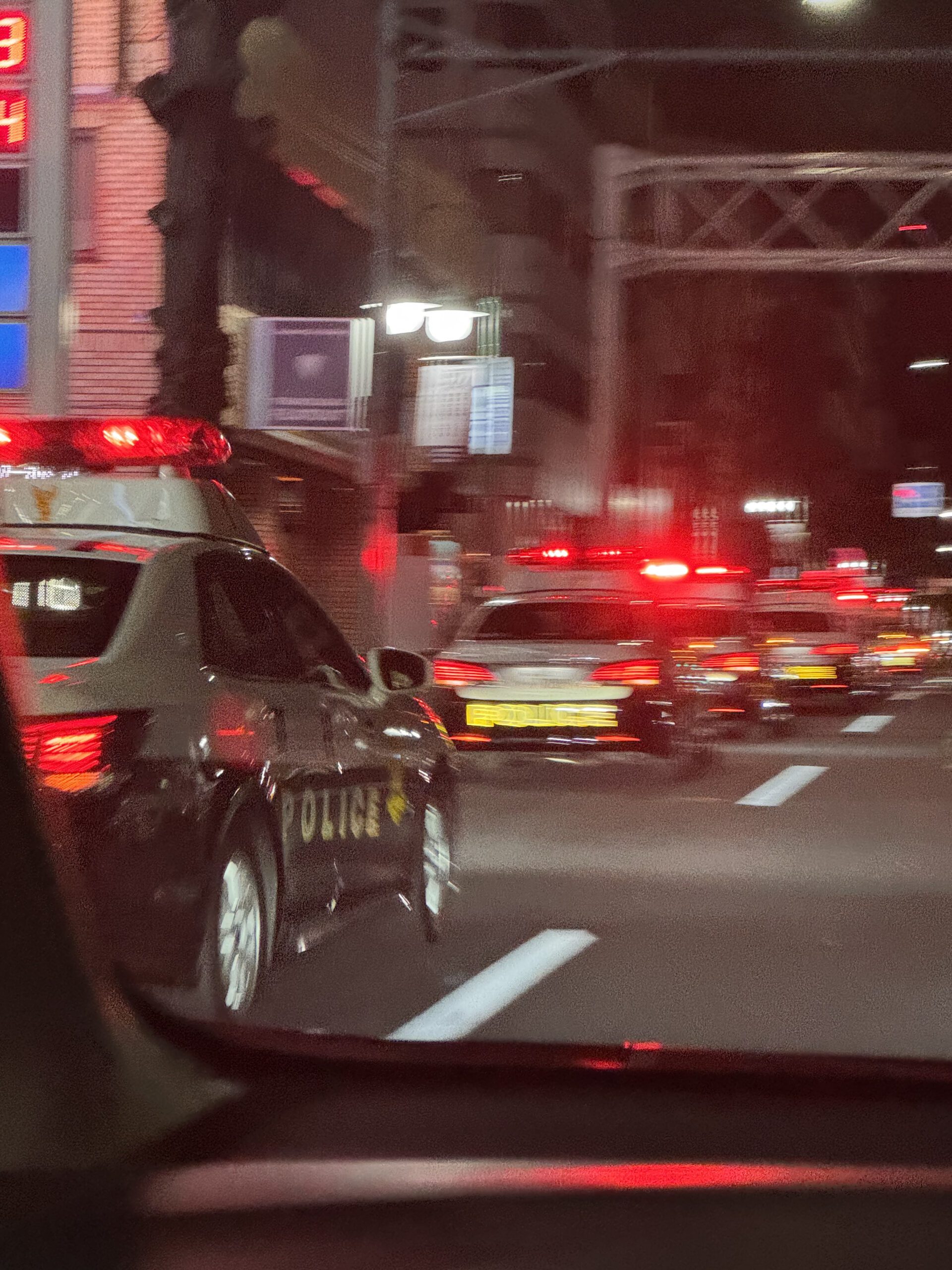
Do not run. This cannot be stressed enough. Running — or driving away quickly — immediately signals that you have something to hide. In Japan, that level of panic response is associated with drug offenses. What started as a routine dispersal becomes a pursuit. The police had no intention of detaining anyone, and now they do. You caused that.
Stay calm, comply, and be friendly. Officers at car meets are usually there to move people along, not to arrest anyone. Smile, nod, start your engine, and leave at a normal pace. That’s all that’s required.
Don’t be the reason the meet ends permanently. Car meets exist in a delicate balance with local authorities. Incidents caused by panicking foreigners are exactly the kind of thing that gets a location shut down for good.
The One Thing That Can Actually Ruin Your Trip
Everything above is manageable. This is not:
Driving without an International Driving Permit.
No IDP means you’re driving illegally in Japan, full stop. Unlike minor traffic violations, driving without proper licensing is treated seriously — it can result in court proceedings, not just a warning. The friendly, flexible attitude Japanese police show toward foreign visitors does not extend to this.
Get your IDP before you leave your home country. It takes a few days and costs around $20. There is no version of this where skipping it is worth the risk.
Dealing With the Language Gap
Japanese police officers generally don’t speak English. However, most studied it for years in school, so speaking slowly and clearly helps more than you’d expect.
For everything beyond basic communication: translation app, phone screen facing them. It’s practical, not awkward, and officers are used to it with foreign visitors.
The universal language that works everywhere: calm, cooperative body language. Hands visible, no sudden movements, relaxed demeanor. That communicates more than any vocabulary.
Quick Reference
Situation
What To Do
Stopped on foot
Cooperate, show passport if asked
Pulled over driving
Passport + home license + IDP, hand over immediately
At a car meet when police arrive
Stay calm, leave slowly, do not run
Minor traffic violation
Cooperate — fines rarely stick for foreign visitors
No IDP
This is serious — don’t drive without one
Refusing questioning
Legal in theory, catastrophic in practice — don’t
Language barrier
Speak slowly, use translation app
The Bottom Line
Japanese police are, on balance, some of the most professional and reasonable law enforcement you’ll encounter anywhere in the world — especially toward foreign visitors. The system works in your favor as long as you don’t fight it.
Be cooperative. Be friendly. Have your documents ready. Don’t run.
Do those four things and the worst outcome of any police interaction in Japan is a slightly awkward conversation and a delayed night out.
Heading to a car meet? Read our complete etiquette guide first — knowing how to conduct yourself goes a long way before the police even enter the picture.
Japan’s car meet scene is one of the most welcoming in the world — but only if you know how to show up. The rules aren’t complicated, and most of them come down to one principle: treat every car like it belongs to someone who loves it more than anything else they own. Because it probably does.
This guide pulls together everything you need to know before your first Japanese car meet, whether you’re heading to Daikoku PA, Shibuya Carjack, or anywhere in between.
The One Rule That Covers Everything
Before the specifics: if you’re ever unsure whether something is okay, ask yourself — “Would I want someone doing this to my car?”
That single question covers 90% of situations. Japan’s car community runs on mutual respect, and the people you’ll meet have often spent years and serious money building what you’re looking at. Some are still paying for it. Act accordingly.
Don’t Touch the Cars
This is the most important rule, and it applies everywhere in Japan without exception.
Do not touch, lean on, open, or sit in anyone’s car without being explicitly invited to do so. It doesn’t matter how impressive the build is, how much you want a closer look, or how friendly the owner seems. Wait to be invited.
If an owner pops the hood or opens a door, that’s your invitation. Until then, keep your hands to yourself.
Photography — Free, But Do It Right
Photography is generally fine at Japanese car meets. However, how you do it matters as much as whether you do it.
Don’t silently point a camera at someone’s car from a distance and walk away. Make eye contact, show enthusiasm, give a thumbs up. A genuine reaction — even without shared language — goes a long way. Owners notice the difference between someone who’s genuinely excited about their build and someone who’s just collecting photos.
For cars at illegal or semi-legal meets: don’t post online immediately after the event. This is one of the most important unwritten rules in Japan’s car culture. Wait. Let the night pass before anything goes on social media. Posting in real time can end the event for everyone, and you’ll quickly become unwelcome.
Communication — Language Is Not a Barrier
Most Japanese car enthusiasts don’t speak conversational English. However, most of them studied English for around six years in school — which means if you speak slowly and clearly, more gets through than you’d expect.
For everything else: use a translation app. Pull out your phone, type what you want to say, and show them the screen. It’s not awkward — it’s practical, and people appreciate the effort. Google Translate’s camera mode also works well for reading Japanese signs and stickers on builds.
The best conversation starter: if you drive a JDM car back home, say so. Tell them what you drive. Show them a photo. This works better than any icebreaker — Japanese car owners genuinely light up when a foreigner tells them they’re running the same platform on the other side of the world. It creates an instant connection that transcends the language barrier completely.
Approaching Cars and Owners
Walking up to look at someone’s car is completely fine — there’s no need to hang back or ask permission just to look. Car meets exist precisely for this.
The key is awareness. Read the situation. If an owner is in the middle of a conversation, don’t interrupt. If someone is clearly not in the mood for interaction, respect that. And when you do approach, do it with visible enthusiasm — make it obvious you’re there because you love cars, not just because you’re a tourist passing through.
If You’re Arriving by Car
Large Meets (Daikoku PA, Odaiba, etc.)
Arriving by rental car is fine at larger meets. However, do not park your rental car among the modified builds. JDM cars line up together. A stock rental in the middle of that lineup is a clear etiquette violation — find a separate area of the car park for standard vehicles.
Smaller or Street Meets (Shibuya Carjack, etc.)
At tighter locations, park nearby rather than in the meet itself. Find a legal parking spot a short walk away, then walk in. Don’t try to squeeze a rental into a space that’s clearly part of the meet.
Engine and Noise
Turn your engine off when you’re parked. If your car is stock or near-stock, leaving it idling is generally fine. If it’s modified and loud, shut it down — unnecessary noise in a residential or enclosed area reflects badly on the whole scene.
When the Police Show Up
At some point, police will show up. It happens at Daikoku, Tatsumi, Shibuya Carjack — nearly everywhere. Here’s how to handle it:
Stay calm. Do not run.
Panicking and driving away fast is the worst thing you can do. It draws attention, creates danger, and makes the situation worse for everyone. When police arrive and ask people to move on, comply quietly and without drama. The meet will likely reconvene somewhere else, or the same spot will come back to life an hour later. It’s part of the rhythm — not the end of the night.
The Driving Rules — Don’t Get This Wrong
This is where foreign visitors make the most serious mistakes.
You need an International Driving Permit (IDP) to drive in Japan. Your home country license alone is not valid. If you’re driving without one and police are present — and at car meets, they often are — you will be stopped, and the consequences are significant.
Beyond the permit: Japan drives on the left side of the road, and traffic regulations are strictly enforced. Speed limits, lane discipline, and road rules are taken seriously in ways that might feel unfamiliar if you’re used to driving in other countries. Take the first few kilometers slowly, get comfortable with the road, and don’t let the excitement of the night push you into doing something you can’t take back.
Don’t have an IDP yet? Read our full rental car guide before your trip.
Stay Aware of Your Surroundings
The energy at a good car meet is infectious. It’s easy to get completely absorbed — and that’s fine, that’s the whole point. However, the best people at these events are always aware of what’s happening around them.
Watch where you’re standing. Be conscious of cars moving in and out. Don’t block exits or access routes. Keep an eye on the general atmosphere — if things start to feel tense or something seems off, trust that instinct and give yourself space.
The simple rule: enjoy everything, but stay present. If you do that, you’ll be fine anywhere in Japan’s car scene.
Quick Reference
Rule
Details
Touching cars
Never without invitation
Photography
OK — show enthusiasm, don’t post illegal meets immediately
Language
Speak slowly, use translation app, show your own JDM car
Arriving by rental
Fine at large meets — don’t park among modified cars
Engine on
Turn off when parked, unless fully stock
Police
Stay calm, comply quietly, don’t run
IDP
Mandatory — get it before you leave your country
Driving side
Left — take it slow at first
Universal rule
Would you want this done to your car?
The Bottom Line
Japan’s car meet scene will give you some of the best experiences you’ve ever had around cars. The community is open, the builds are incredible, and the culture runs deeper than almost anywhere else in the world.
None of the rules here are difficult. Show respect, use common sense, and approach everything with genuine enthusiasm for the cars — not just as a spectator experience, but as a culture worth understanding. Do that, and you’ll be welcomed back every time.
If you’re visiting Tokyo’s car scene for the first time, you’ll hear two names more than any other: Daikoku PA and Tatsumi PA. Both are on the Wangan. Both attract serious car people. However, they are completely different experiences — and knowing the difference will change how you plan your night.
Short answer: go to Daikoku first. But read on, because the full picture is more interesting than that.
The Fundamental Difference
Daikoku PA is the main event. It’s loud, unpredictable, and packed with every genre of car culture you can imagine — all in the same car park, on the same night. Furthermore, it sits inside a highway interchange structure, which means the setting itself is unlike anything you’ve seen before.
Tatsumi PA is the comedown. Smaller, quieter, more conversational. Where Daikoku is a spectacle, Tatsumi is a vibe. It’s where the night ends, not where it starts.
Neither is better. They serve completely different moods — and ideally, you visit both.
Daikoku PA — Everything, All at Once
The Basics
Daikoku Futo PA sits on the Bayshore Route (湾岸線) of the Metropolitan Expressway in Yokohama. Car only — there’s no train access. If you don’t have a rental car yet, get one. Taking a taxi from central Tokyo costs more than a day’s rental, so factor that in.
The short answer is everything. Supercars, JDM builds, drift cars, stance builds, American muscle, classic Kei cars — on any given night at Daikoku you’ll find genres that would never share a car park anywhere else in the world. In contrast to most car meets that attract a specific crowd, Daikoku is genuinely all-inclusive.
The crowd shifts depending on when you go:
Weekday afternoons / evenings — More street-oriented, more JDM. Mondays in particular are notable because many Japanese mechanics have the day off, which means the people who actually build and maintain these cars show up in their own machines.
Weekend daytime — All genres, including the supercar crowd. If Ferraris and GT-Rs in the same frame is what you’re after, weekend afternoons deliver.
After midnight — The street scene takes over. Builds get more aggressive, the energy shifts, and unexpected things happen. Spontaneous burnouts. Police showing up. The kind of moments that don’t repeat.
The Facilities
Daikoku has food options, vending machines, and a convenience store. However, deep into the night only the vending machines and convenience store stay open. Plan accordingly — arriving hungry at 2AM means vending machine food.
Police and Closures
Friday, Saturday, and Sunday evenings from around 8PM bring police presence and periodic closures — the same pattern as Tatsumi. When Daikoku closes, the crowd often moves, only to return hours later. It’s part of the rhythm. Don’t leave permanently just because the police roll through.
The First-Timer Experience
Two things catch everyone off guard at Daikoku. First, the physical structure — you’re inside an elevated highway interchange, with roads curving overhead, concrete columns everywhere, and the sound of cars on the expressway above mixing with everything happening in the car park below. It’s surreal in the best way.
Second, the spontaneity. Something happens at Daikoku that doesn’t happen at organized events — because nothing is organized. A car you’ve never seen before rolls in at midnight. A burnout happens without warning. A crowd forms around a single build for reasons you can’t quite explain. Every visit is different, which is why regulars go back again and again.
Photography
Completely free. However, remember what you’re looking at: these are privately owned, personally built cars. For many owners, this is a machine they’ve spent years and significant money building — sometimes taken on debt to make it happen. Photograph freely, but approach with the respect that deserves.
Do not touch the cars without being invited. This applies everywhere in Japanese car culture, but at Daikoku where the builds are serious and the owners are proud, it matters especially.
Tatsumi PA — Where the Night Ends
The Basics
Tatsumi PA is also on the Bayshore Route, closer to central Tokyo. Car only. Same closure pattern as Daikoku — Friday, Saturday, and Sunday evenings from around 8PM. When Daikoku closes, Tatsumi often closes too, so if both are shut on the same night, that’s just how it is. Weeknights are more reliable for both.
Tatsumi has Wangan roots — historically it was associated with the high-speed midnight crowd, the culture that inspired the manga and games. That era is largely gone, but the PA still attracts a grip-oriented, street-focused crowd. On a typical night you might find 10 cars. That’s not a disappointment — it’s the whole point.
The smaller scale means you’re not anonymous. People notice when a foreigner makes the effort to show up at Tatsumi, and the conversations that follow tend to be more genuine than anything you’ll have in a crowd of hundreds.
The Vibe
If Daikoku is upper energy, Tatsumi is chill. People lean on bonnets, talk, and take their time. The best conversations in Tokyo’s car scene happen at Tatsumi at 1AM when the night has already peaked and everyone who’s still there is there because they want to be.
Head-to-Head
Daikoku PA
Tatsumi PA
Location
Yokohama, Bayshore Route
Koto-ku Tokyo, Bayshore Route
Vibe
High energy, spectacle
Chill, conversational
Scale
100+ cars on big nights
~10 cars typical
Car Genres
Everything
Grip-oriented, street
Best Time
Weekday nights, after midnight
Late night any weekday
Closures
Fri/Sat/Sun from ~8PM
Same
Facilities
Convenience store, vending machines
Basic
Foreign Visitors
Very common
Rare
First Timer?
Go here first
Go here after Daikoku
The Recommended Route
If you have one night: Daikoku. No question.
If you have more time — and you should, because Daikoku rewards repeat visits — the optimal route is:
Heiwajima PA → Tatsumi PA → Daikoku PA
Save Daikoku for last. Once you’ve experienced it, every other PA will feel smaller. By doing Tatsumi and Heiwajima first, you build context for what makes Daikoku special. And when you finally pull into Daikoku at midnight and see what’s there — you’ll understand why people drive from all over Japan to be in that car park.
One more thing: don’t try to do all three in one night on your first visit. Give each place the time it deserves.
The One Rule That Applies to Both
The cars in these car parks belong to real people. Not display models, not press cars — privately owned machines that represent years of work, passion, and in many cases real financial sacrifice. Some of the builds you’ll see took debt to achieve.
Look freely. Photograph everything. Talk to owners if they’re open to it. However, never touch a car without being invited to. That boundary is absolute, and respecting it is the difference between being welcome and not.
Getting There
Both PAs are only accessible by car — no train access to either. Rent a car, use the Metropolitan Expressway Bayshore Route (湾岸線), and navigate to each PA from there.
Taking a taxi from central Tokyo to Daikoku costs more than renting a car for the day. Get the rental.
Daikoku PA is one of the greatest car culture destinations on Earth. Tatsumi PA is where you go when you want something more real. Both are worth your time, and together they give you the full picture of what Tokyo’s Wangan scene actually looks like.
Go to Daikoku first. Go back multiple times. End your nights at Tatsumi. That’s the move.
You’ve flown to Japan to experience the real car culture. Therefore, at some point, you’re going to want to drive it. Renting a car in Japan is straightforward once you know the system — but there are a few things that will cost you serious money if you get them wrong. This guide covers everything you need to know.
Step 1: Get Your International Driving Permit Before You Leave
This is non-negotiable. Japan requires an International Driving Permit (IDP) for foreign visitors — your home country license alone is not enough.
Get your IDP before you leave your home country from your national automobile association (AAA in the US, AA in the UK, CAA in Canada, etc.). It takes a few days to process and costs around $20. You cannot get one in Japan.
Bring both your IDP and your original home country license — you need both at the rental counter.
Step 2: Choose Your Rental Company
Standard Option — Toyota Rent a Car / Nippon Rent-A-Car
For most visitors, these are the safest and most reliable choices. Well-maintained fleets, English-friendly booking systems, and locations nationwide. If you’re here to visit car meets and drive Tokyo’s expressways rather than specifically drive a JDM sports car, go here.
If driving a Silvia, Skyline, or other JDM sports car is the whole point of your trip, Omoshiro Rent-A-Car is the option that exists for exactly that reason. However, understand the tradeoffs clearly before booking.
These cars are driven hard by enthusiasts, and maintenance standards are not always what you’d expect from a major chain. Before you accept any vehicle, check the tires thoroughly. Japanese law requires a minimum tread depth of 1.6mm — below that, the car is illegal to drive. If the tires look borderline, say something before you leave the lot. Once you drive away, responsibility shifts to you, and the financial consequences of a breakdown or incident can be significant.
Go in with eyes open, check everything before you accept the car, and you can have an incredible experience. Go in assuming everything will be fine and you might have a bad time.
Step 3: Book in Advance Online
Walk-in is possible, but online booking gives you vehicle selection, better rates, and the ability to request an ETC card. For popular models at Omoshiro, advance booking is essentially mandatory — the good cars go fast.
Step 4: Decide Where to Pick Up
For visiting Tokyo’s car scene specifically, city pickup makes more sense than airport pickup in most cases.
Getting from Narita Airport to Shibuya by bus or train costs around $10 per person. Compare that to driving a rental car into central Tokyo and paying ¥3,000–5,000 per day just to park it near your hotel. Unless you’re heading straight out of the city on arrival, leave the car for when you need it.
Pick up the car when you’re ready to use it — Tatsumi PA run, Daikoku PA night, Chiba Damashi, whatever’s on the itinerary.
Step 5: Rent an ETC Card
If you’re driving Tokyo’s expressways — and if you’re reading this site, you are — rent an ETC card from the rental company when you pick up the car. Most major chains offer this for a small daily fee.
Without an ETC card, you pay cash at toll booths, which means stopping, fumbling for change, and slowing down at every gate. The Wangan is not a place you want to be doing that.
Step 6: The Pickup Process
At the counter you’ll need:
Your International Driving Permit
Your home country driver’s license
Your passport
A credit card (debit cards are often not accepted)
Walk around the car before driving away. Check for existing damage and make sure it’s documented. Check the tires — especially important if you’re renting from a specialist JDM rental company. Check the fuel level and note what type of fuel the car requires (regular vs. premium).
Step 7: Returning the Car — Fill the Tank
First, one important question to ask at the counter: “Is fuel included in the price?”
In Japan, fuel is almost never included in the rental fee. Unlike some countries where rentals come with a full tank and you return it empty, the standard in Japan is that you pick up the car with fuel in it and return it at the same level — typically full. Always confirm this at pickup to avoid surprises.
With the exception of Times Car (which operates on a different system), you must return the car with a full tank of fuel. This is standard across Japanese rental companies.
If you return without a full tank, the rental company will charge you for the missing fuel at their rate — which is significantly higher than pump price. Fill up at a gas station before returning, show the receipt if asked, and you’re done.
Parking — Read This Carefully
This is where most first-time visitors get caught out. Parking on Japanese roads without permission is illegal and will result of a fine of around ¥9,000 (approximately $60–70).
The rules:
White painted bays on the street — these are metered parking spaces and are legal to use. You must pay at the nearby parking meter machine, typically around ¥300 per set time period. Do not assume a white box means free parking.
Coin parking lots (コインパーキング) — these are everywhere in Japanese cities. Look for the signs, drive in, and pay when you leave. Rates vary but are clearly posted. These are the safest and most convenient option.
No parking zones — most urban streets. Don’t stop, even briefly.
For finding legal parking near wherever you’re going: parkingmeter.jp — Tokyo’s official guide to legal on-street parking locations.
Quick Reference
Item
Details
IDP Required
Yes — get it before leaving your country
Best Standard Company
Toyota Rent a Car / Nippon Rent-A-Car
JDM Sports Car Option
Omoshiro Rent-A-Car — check tires before accepting
Book in Advance
Yes — especially for specific models
ETC Card
Rent one if driving expressways
Fuel on Return
Full tank required (except Times Car)
Illegal Parking Fine
~¥9,000 (~$60–70)
Parking App
parkingmeter.jp
Drive Side
Left — take the first few km slowly
The Bottom Line
Renting a car in Japan unlocks everything this site is about — the PAs, the circuits, the mountain roads, the car meets that don’t have train access. Get your IDP sorted before you leave home, book in advance, rent an ETC card, and learn the parking rules.
Do those four things and the rest takes care of itself.
Planning a Daikoku PA run or heading to Chiba Damashi? A rental car isn’t optional — it’s how you get there.
Daikoku PA is the show. Tatsumi PA is where you go after the show.
Located on the Wangan line in Koto-ku, Tatsumi is the quieter, more laid-back cousin of Tokyo’s famous PA scene. Where Daikoku brings energy, noise, and crowds, Tatsumi is chill — 10 cars on a good night, people leaning on bonnets, talking. The kind of place where the real conversations happen.
What Is Tatsumi PA?
Tatsumi PA is a rest area on the Bayshore Route (湾岸線) of the Metropolitan Expressway in Tokyo. Historically, it was known as a gathering point for the Wangan crowd — the high-speed crew, the midnight maximum velocity culture that defined Tokyo’s street scene in the 90s and early 2000s. That era is largely gone, but the PA remains, and a new generation of grip-oriented builds and street cars has taken its place.
These days Tatsumi is a mixed crowd. However, the vibe is consistent: lower key, more relaxed, and far less chaotic than Daikoku on a busy night.
Daikoku vs. Tatsumi
If Daikoku is the main stage, Tatsumi is the backstage. The difference in atmosphere is immediate.
Daikoku PA
Tatsumi PA
Vibe
Hype, crowded, loud
Chill, relaxed, quiet
Scale
100+ cars on peak nights
10 cars on a good night
Crowd
Every genre
Grip-oriented, Wangan crowd
Energy
Upper
Lower, more conversational
Neither is better — they serve different moods. Nevertheless, if you’ve only ever experienced Daikoku, Tatsumi shows you a completely different side of Tokyo’s PA culture.
When to Go
Best time: Late night — from around 10PM onwards
Closed: Tatsumi PA closes on Friday, Saturday, and Sunday evenings from around 8PM — the same pattern as Daikoku. In fact, when Daikoku is closed, Tatsumi is usually closed too. Therefore, if you’re planning a PA run on a weekend night, check conditions before heading out.
Weeknights are generally more reliable if you want to find cars without risking a closed gate.
Getting There
Tatsumi PA is only accessible by car — there’s no train access.
Recommended route for a full Tokyo PA night:Heiwajima PA → Daikoku PA → Tatsumi PA
This loop covers three different stops, three different atmospheres, and gives you a proper picture of Tokyo’s expressway culture in a single night. Start early, end at Tatsumi when the energy winds down.
For International Visitors
Foreign visitors are rare at Tatsumi compared to Daikoku — which means the experience is more authentic and less performative. If you make the effort to get there, people notice.
Photography is fine. The smaller scale means you’re not anonymous in a crowd — introduce yourself, show genuine interest in the cars, and you’ll have better conversations here than almost anywhere else on the PA circuit.
Quick Reference
Info
Details
Location
Tatsumi PA, Bayshore Route, Koto-ku, Tokyo
Access
Car only — Bayshore Route (湾岸線)
Best Time
Late night, weeknights most reliable
Closed
Fri / Sat / Sun evenings from ~8PM
Cars
Grip builds, street cars, Wangan crowd
Scale
~10 cars on a typical night
Photography
No problem
Foreigners
Rare — makes it more interesting
Vibe
Chill, conversational
The Bottom Line
Tatsumi PA won’t give you the spectacle of Daikoku. That’s the point. It’s the place you end up at 1AM after everything else has wound down — a small group of serious car people, cold air off the bay, and no pretense.
The Wangan culture that made this stretch of expressway legendary is still here. It’s just quieter now. And sometimes quiet is exactly what you’re looking for.
Running the full circuit? Heiwajima PA → Daikoku PA → Tatsumi PA is the move. Give yourself a full night.