Filling up in Japan is straightforward once you know the system. However, get it wrong and you could end up with the wrong fuel in your rental car, cash stuck in a machine you don’t understand, or a bill that’s 30% higher than it needed to be. This guide covers everything so none of that happens to you.
Self-Service vs Full-Service
Most gas stations in Japan are self-service (セルフ). Full-service stations exist but are less common and consistently more expensive. Unless you specifically need help, use self-service — it’s cheaper and faster.
Personal take: Full-service is rarely worth the premium. Stick to self-service.
Fuel Types — Get This Right First
Japan has three fuel types. Putting the wrong one in your car ranges from inconvenient to catastrophic.
| Japanese | English | Nozzle label | Risk if wrong |
|---|---|---|---|
| レギュラー | Regular (91 octane) | レギュラー | Low — most cars run fine |
| ハイオク | Premium / High-octane (98 octane) | ハイオク | Knocking and rough running, but won’t destroy the engine |
| 軽油 | Diesel | 軽油 | Engine will stop running — call roadside assistance immediately |
The diesel mistake is the serious one. If you accidentally pump diesel into a petrol car, do not start the engine. Call the rental company’s emergency line immediately.
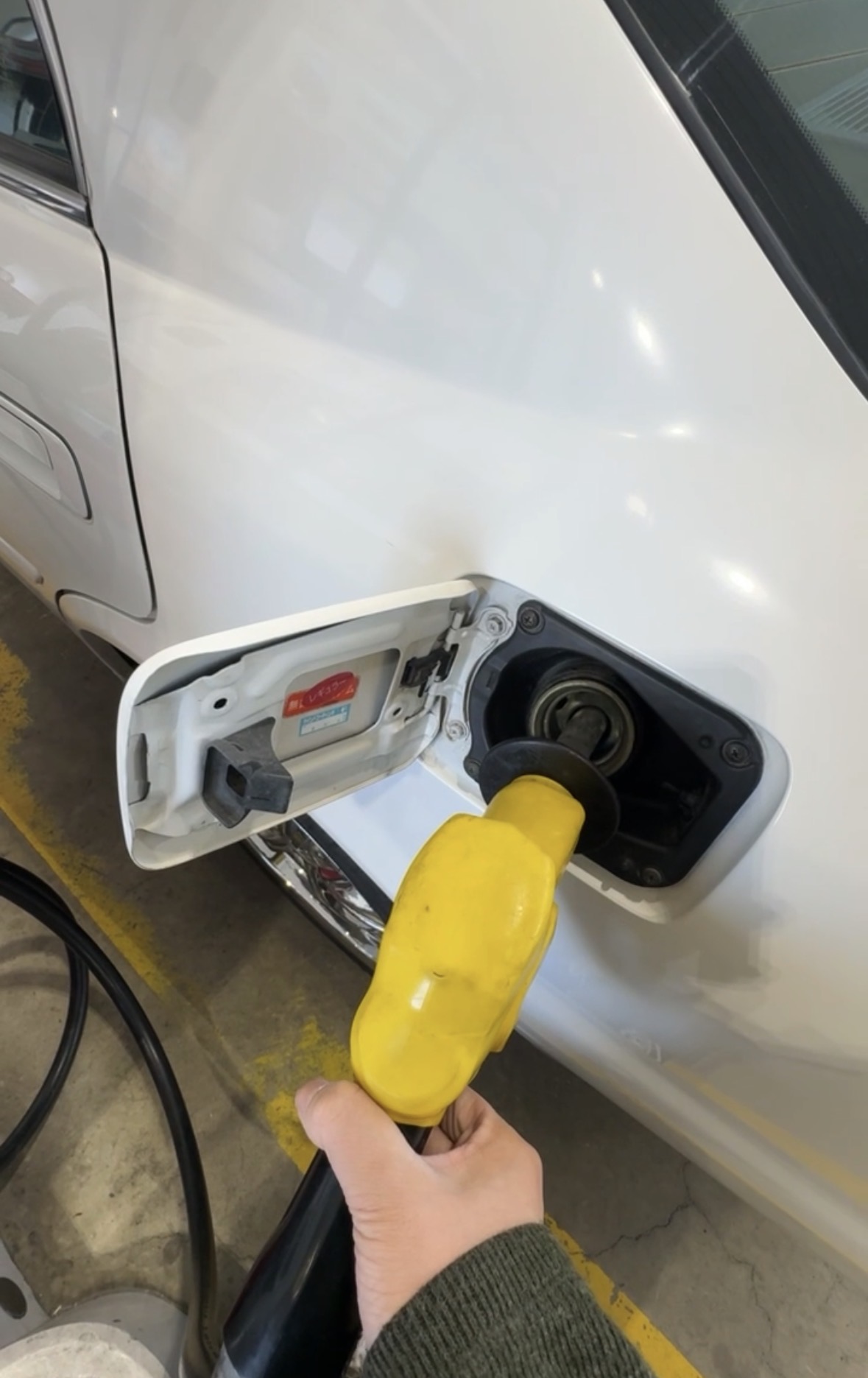
How to know which fuel your rental car takes: Check the fuel cap or the inside of the fuel filler door — there’s almost always a sticker. It will say レギュラー or ハイオク. When in doubt, ask at the counter before pumping.
For JDM sports cars: It varies by model. Check before you drive, not at the pump.
Step-by-Step: How to Use a Japanese Self-Service Station
Step 1: Change the Language
Most modern self-service machines allow you to switch to English. Look for a language button on the screen when you approach — tap it before doing anything else.
Step 2: Touch the Static Electricity Pad
Before touching the nozzle, press the 静電気除去シート (static electricity removal pad) — it’s usually a small sheet on the pump. A brief touch is enough. This is a safety step and it’s standard practice in Japan.
Step 3: Select Your Payment Method
Choose cash or card on the screen.
- Credit card: Insert your card first. International cards generally work fine.
- Cash: Insert your bills upfront. You pay before pumping, and collect change from a separate machine after — not from the pump itself. If you can’t find where to collect your change, ask a staff member.
Step 4: Select Your Fuel Type
The screen will show レギュラー、ハイオク、軽油. Select the correct one. Take note of which colour the machine highlights for your selection — nozzle colours vary by station and company, so the screen colour is your most reliable reference. The nozzles themselves are labelled, but sometimes in Japanese only.
Step 5: Select the Amount
Choose 満タン (mantank) for a full tank — this is what you want when returning a rental car. Alternatively, you can select a specific yen amount or litre amount.
Step 6: Pump the Fuel
Take the nozzle, insert it fully into the fuel filler, and squeeze the handle. Hold it or lock it in place — the nozzle will automatically stop when the tank is full. Do not force more fuel in after it stops.
Step 7: Replace the Nozzle and Collect Your Change
Return the nozzle to the pump. If you paid cash, go to the change machine (separate unit, usually nearby) to collect your change. Keep the receipt if you need it for the rental car return.
Full-Service Stations — What to Expect
If you pull into a full-service station, an attendant will approach your car. The exchange is short:
- They’ll ask your fuel type — say レギュラー or ハイオク, or show them the sticker on the fuel cap
- They’ll ask how much — say 満タンで (mantanku de) for full tank
- At the end, they’ll ask your payment method — カードで (ka-do de) for card, 現金で (genkin de) for cash
Full-service costs more than self-service. There’s no meaningful benefit for most drivers.
Where to Fill Up — Price Tips
Avoid filling up in central Tokyo. Fuel prices in the city centre are noticeably higher than suburban or highway-adjacent stations. If you’re heading out on a Wangan run, fill up before you get into the city or on your way out.
Highway SA stations charge 20–30% more than regular stations. Only use them if you’re running low with no alternative.
Best strategy: Fill up in suburban areas on your way to wherever you’re going, and return the tank full from a station outside the city centre before dropping off the rental.
Car Wash
Most Japanese gas stations have an automatic car wash machine. The process works the same way as the fuel pump — select your wash type on the screen, pay, drive in, and follow the instructions. It’s a surprisingly satisfying experience and costs a few hundred yen for a basic wash.
Quick Reference
| Thing to know | Detail |
|---|---|
| Language | Switch to English on the screen first |
| Static pad | Touch it briefly before handling the nozzle |
| Diesel mistake | Do NOT start the engine — call rental assistance |
| Full tank | Select 満タン on screen |
| Auto-stop | Nozzle stops automatically when full |
| Cash change | Collected from a separate machine, not the pump |
| Card | International cards accepted |
| Highway stations | 20–30% more expensive — avoid if possible |
| Central Tokyo | Higher prices — fill up outside the city |
Useful Japanese Phrases
| Phrase | Pronunciation | Meaning |
|---|---|---|
| 満タンで | Mantanku de | Full tank please |
| レギュラーで | Regyuraa de | Regular fuel |
| ハイオクで | Hai-oku de | Premium fuel |
| カードで | Kaado de | By card |
| 現金で | Genkin de | By cash |
| いくらですか? | Ikura desu ka | How much is it? |
The Bottom Line
Japanese gas stations are clean, fast, and well-organised. The self-service machines look intimidating at first, but once you’ve done it once it becomes automatic. Switch the language to English, check your fuel type before you pump, and never put diesel in a petrol car.
Renting a car for your trip? Read our complete rental car guide before you pick up the keys.
コメントを残す