カテゴリー: Rent a car

  • How to Use a Japanese Gas Station — The Complete Guide for Foreign Drivers

    How to Use a Japanese Gas Station — The Complete Guide for Foreign Drivers

    Filling up in Japan is straightforward once you know the system. However, get it wrong and you could end up with the wrong fuel in your rental car, cash stuck in a machine you don’t understand, or a bill that’s 30% higher than it needed to be. This guide covers everything so none of that happens to you.


    Self-Service vs Full-Service

    Most gas stations in Japan are self-service (セルフ). Full-service stations exist but are less common and consistently more expensive. Unless you specifically need help, use self-service — it’s cheaper and faster.

    Personal take: Full-service is rarely worth the premium. Stick to self-service.


    Fuel Types — Get This Right First

    Japan has three fuel types. Putting the wrong one in your car ranges from inconvenient to catastrophic.

    JapaneseEnglishNozzle labelRisk if wrong
    レギュラーRegular (91 octane)レギュラーLow — most cars run fine
    ハイオクPremium / High-octane (98 octane)ハイオクKnocking and rough running, but won’t destroy the engine
    軽油Diesel軽油Engine will stop running — call roadside assistance immediately

    The diesel mistake is the serious one. If you accidentally pump diesel into a petrol car, do not start the engine. Call the rental company’s emergency line immediately.

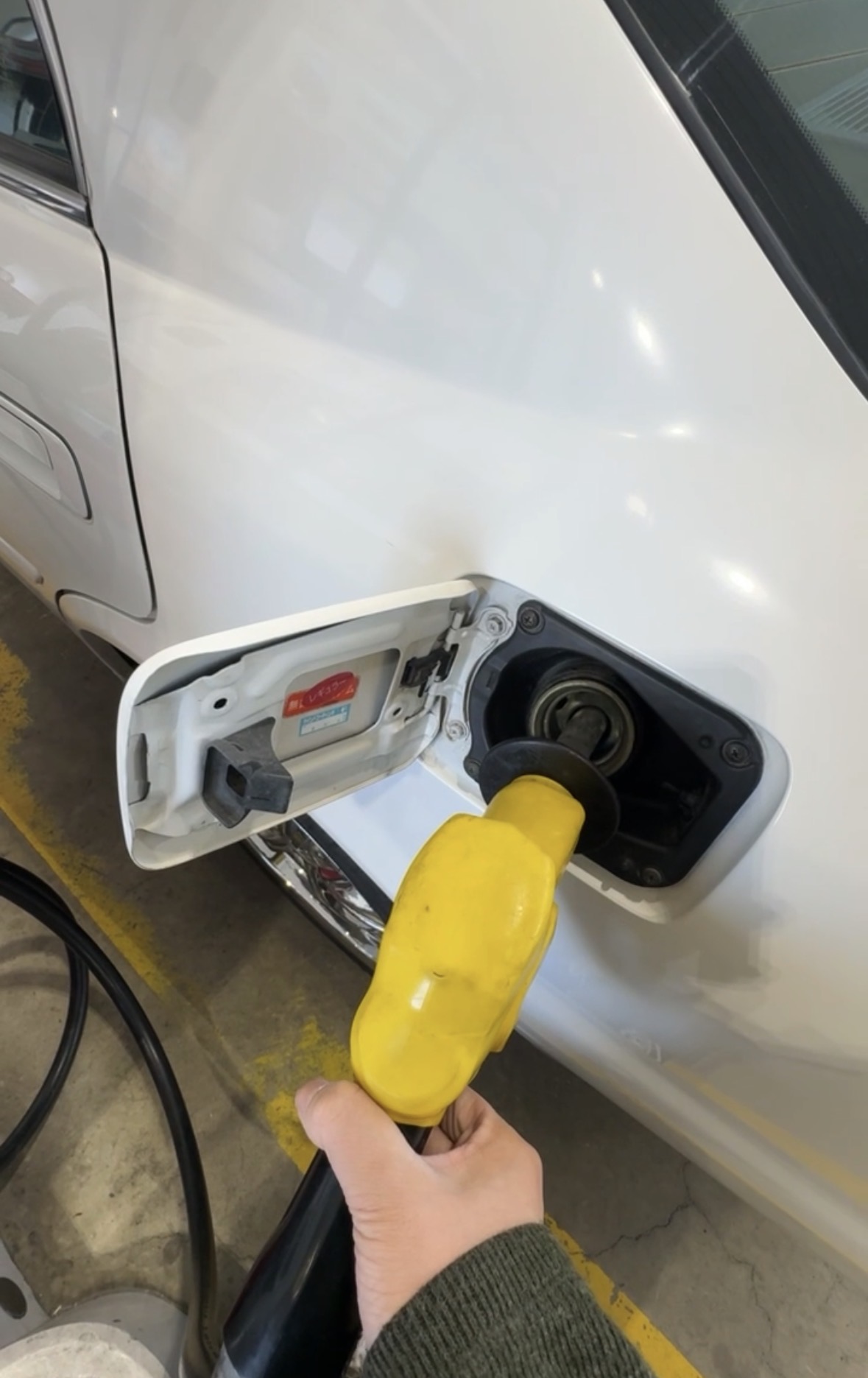
    How to know which fuel your rental car takes: Check the fuel cap or the inside of the fuel filler door — there’s almost always a sticker. It will say レギュラー or ハイオク. When in doubt, ask at the counter before pumping.

    For JDM sports cars: It varies by model. Check before you drive, not at the pump.


    Step-by-Step: How to Use a Japanese Self-Service Station

    Step 1: Change the Language

    Most modern self-service machines allow you to switch to English. Look for a language button on the screen when you approach — tap it before doing anything else.

    Step 2: Touch the Static Electricity Pad

    Before touching the nozzle, press the 静電気除去シート (static electricity removal pad) — it’s usually a small sheet on the pump. A brief touch is enough. This is a safety step and it’s standard practice in Japan.

    Step 3: Select Your Payment Method

    Choose cash or card on the screen.

    • Credit card: Insert your card first. International cards generally work fine.
    • Cash: Insert your bills upfront. You pay before pumping, and collect change from a separate machine after — not from the pump itself. If you can’t find where to collect your change, ask a staff member.

    Step 4: Select Your Fuel Type

    The screen will show レギュラー、ハイオク、軽油. Select the correct one. Take note of which colour the machine highlights for your selection — nozzle colours vary by station and company, so the screen colour is your most reliable reference. The nozzles themselves are labelled, but sometimes in Japanese only.

    Step 5: Select the Amount

    Choose 満タン (mantank) for a full tank — this is what you want when returning a rental car. Alternatively, you can select a specific yen amount or litre amount.

    Step 6: Pump the Fuel

    Take the nozzle, insert it fully into the fuel filler, and squeeze the handle. Hold it or lock it in place — the nozzle will automatically stop when the tank is full. Do not force more fuel in after it stops.

    Step 7: Replace the Nozzle and Collect Your Change

    Return the nozzle to the pump. If you paid cash, go to the change machine (separate unit, usually nearby) to collect your change. Keep the receipt if you need it for the rental car return.


    Full-Service Stations — What to Expect

    If you pull into a full-service station, an attendant will approach your car. The exchange is short:

    1. They’ll ask your fuel type — say レギュラー or ハイオク, or show them the sticker on the fuel cap
    2. They’ll ask how much — say 満タンで (mantanku de) for full tank
    3. At the end, they’ll ask your payment method — カードで (ka-do de) for card, 現金で (genkin de) for cash

    Full-service costs more than self-service. There’s no meaningful benefit for most drivers.


    Where to Fill Up — Price Tips

    Avoid filling up in central Tokyo. Fuel prices in the city centre are noticeably higher than suburban or highway-adjacent stations. If you’re heading out on a Wangan run, fill up before you get into the city or on your way out.

    Highway SA stations charge 20–30% more than regular stations. Only use them if you’re running low with no alternative.

    Best strategy: Fill up in suburban areas on your way to wherever you’re going, and return the tank full from a station outside the city centre before dropping off the rental.


    Car Wash

    Most Japanese gas stations have an automatic car wash machine. The process works the same way as the fuel pump — select your wash type on the screen, pay, drive in, and follow the instructions. It’s a surprisingly satisfying experience and costs a few hundred yen for a basic wash.


    Quick Reference

    Thing to knowDetail
    LanguageSwitch to English on the screen first
    Static padTouch it briefly before handling the nozzle
    Diesel mistakeDo NOT start the engine — call rental assistance
    Full tankSelect 満タン on screen
    Auto-stopNozzle stops automatically when full
    Cash changeCollected from a separate machine, not the pump
    CardInternational cards accepted
    Highway stations20–30% more expensive — avoid if possible
    Central TokyoHigher prices — fill up outside the city

    Useful Japanese Phrases

    PhrasePronunciationMeaning
    満タンでMantanku deFull tank please
    レギュラーでRegyuraa deRegular fuel
    ハイオクでHai-oku dePremium fuel
    カードでKaado deBy card
    現金でGenkin deBy cash
    いくらですか?Ikura desu kaHow much is it?

    The Bottom Line

    Japanese gas stations are clean, fast, and well-organised. The self-service machines look intimidating at first, but once you’ve done it once it becomes automatic. Switch the language to English, check your fuel type before you pump, and never put diesel in a petrol car.

    Renting a car for your trip? Read our complete rental car guide before you pick up the keys.
  • Foreigners and the Japanese Police: What Every Car Enthusiast Needs to Know

    Foreigners and the Japanese Police: What Every Car Enthusiast Needs to Know

    Let’s get this out of the way first: Japanese police are not your enemy. They’re generally polite, professional, and surprisingly relaxed about the whole thing — especially with foreigners. However, there are a few things that can turn a routine interaction into a very long night, and this guide exists so you don’t accidentally make those mistakes.

    One personal data point: the author of this site was stopped four times in a single day in Shibuya. By the fourth stop, the officers already knew the name and face. Everything was fine. That’s the level of drama we’re talking about.

    The Complete Guide to Japanese Car Meet Etiquette – JDM Pilgrim


    Why You Might Get Stopped in Japan

    Japan is an extraordinarily homogeneous country. Outside of tourist areas, seeing a foreign face is genuinely unusual — and unusual things attract attention, including from police.

    If you’re at Daikoku PA or Shibuya Carjack, you’re in a crowd and largely anonymous. However, if you’re walking through a residential neighborhood, parked in an industrial area late at night, or anywhere that isn’t an obvious tourist destination, the probability of a 職務質問 (shokumu shitsumon) — a police stop and questioning — goes up significantly. In some areas, foreign visitors get stopped roughly once a week.

    This isn’t hostility. It’s curiosity combined with procedure. The important thing is knowing how to handle it.


    What Happens When Police Stop You

    On Foot

    An officer will approach, show their badge, and ask some questions. They want to know who you are, where you’re from, and what you’re doing. That’s it.

    While Driving

    If you’re pulled over while driving, you’ll be asked to present:

    • Your passport
    • Your home country driver’s license
    • Your International Driving Permit (IDP)

    Have all three accessible. Hand them over without being asked twice.


    The Part That Will Surprise You

    Here’s something nobody tells foreign visitors: even if you’ve technically broken a traffic law, the chances of actually receiving a fine are low.

    Japanese law doesn’t have a particularly strong enforcement mechanism for issuing fines to foreign visitors — because fines are typically sent by post to a Japanese address, and you don’t have one. No address to send the notice to means, in many cases, a warning and nothing more.

    This is not an invitation to drive however you want. However, it does mean that if you get pulled over for a minor infraction, there’s no need to panic. Stay calm, be cooperative, and in most cases you’ll be back on your way with nothing more than a lecture you didn’t fully understand.


    Can You Refuse a Police Stop?

    Technically, yes — Japanese law does allow you to decline a 職務質問. In practice, no.

    Refusing or being uncooperative is one of the fastest ways to escalate a routine stop into something much worse. Decline once and you might find ten officers surrounding you within minutes, even if you’ve done absolutely nothing wrong. The legal right to refuse exists on paper. In reality, it’s not a road worth taking.

    Cooperate. Be friendly. It ends faster and better every single time.


    At a Car Meet — How to Handle Police Presence

    Police showing up at a car meet is not an emergency. It’s a Tuesday. Here’s the protocol:

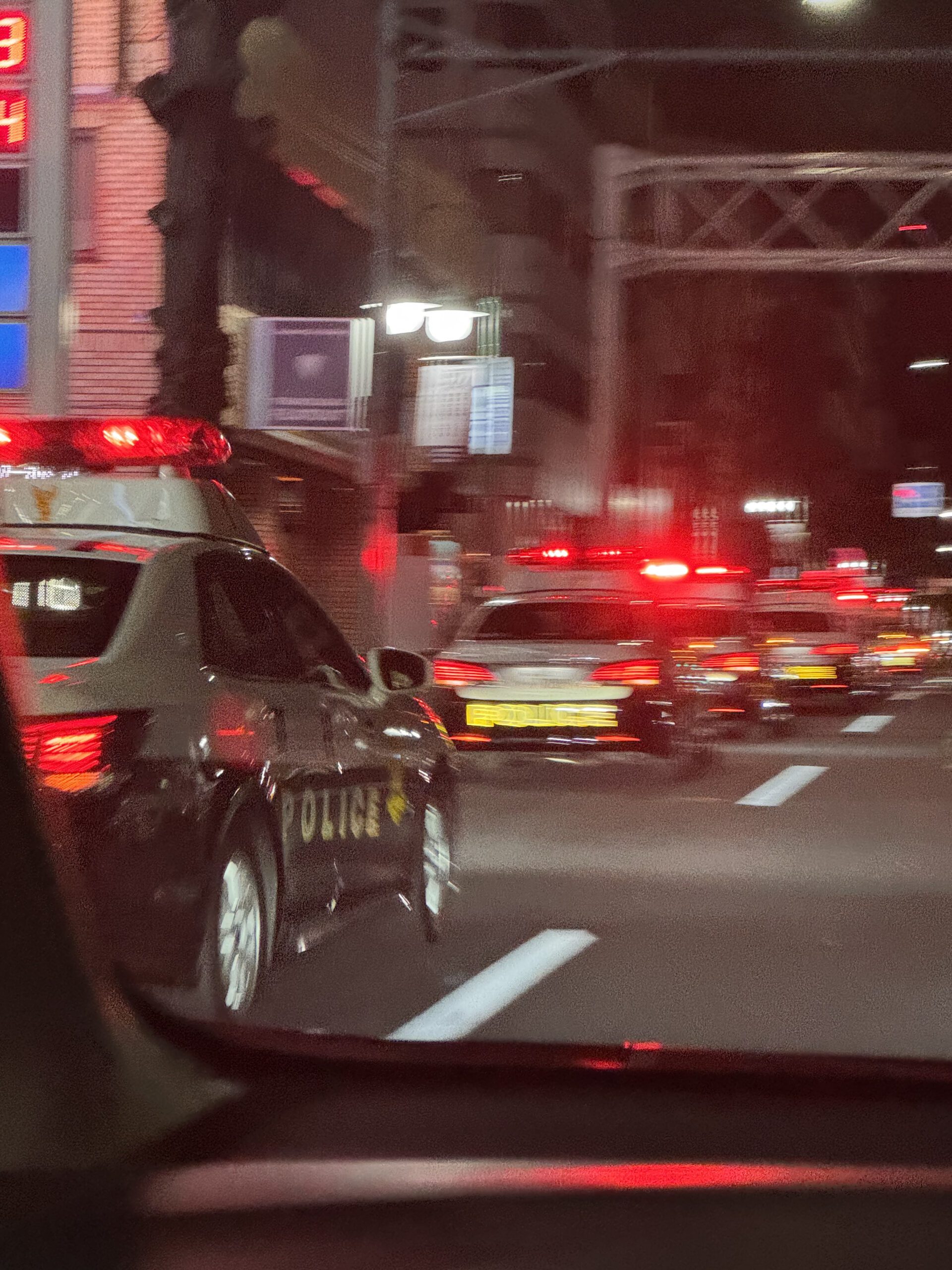
    Do not run. This cannot be stressed enough. Running — or driving away quickly — immediately signals that you have something to hide. In Japan, that level of panic response is associated with drug offenses. What started as a routine dispersal becomes a pursuit. The police had no intention of detaining anyone, and now they do. You caused that.

    Stay calm, comply, and be friendly. Officers at car meets are usually there to move people along, not to arrest anyone. Smile, nod, start your engine, and leave at a normal pace. That’s all that’s required.

    Don’t be the reason the meet ends permanently. Car meets exist in a delicate balance with local authorities. Incidents caused by panicking foreigners are exactly the kind of thing that gets a location shut down for good.


    The One Thing That Can Actually Ruin Your Trip

    Everything above is manageable. This is not:

    Driving without an International Driving Permit.

    No IDP means you’re driving illegally in Japan, full stop. Unlike minor traffic violations, driving without proper licensing is treated seriously — it can result in court proceedings, not just a warning. The friendly, flexible attitude Japanese police show toward foreign visitors does not extend to this.

    Get your IDP before you leave your home country. It takes a few days and costs around $20. There is no version of this where skipping it is worth the risk.


    Dealing With the Language Gap

    Japanese police officers generally don’t speak English. However, most studied it for years in school, so speaking slowly and clearly helps more than you’d expect.

    For everything beyond basic communication: translation app, phone screen facing them. It’s practical, not awkward, and officers are used to it with foreign visitors.

    The universal language that works everywhere: calm, cooperative body language. Hands visible, no sudden movements, relaxed demeanor. That communicates more than any vocabulary.


    Quick Reference

    SituationWhat To Do
    Stopped on footCooperate, show passport if asked
    Pulled over drivingPassport + home license + IDP, hand over immediately
    At a car meet when police arriveStay calm, leave slowly, do not run
    Minor traffic violationCooperate — fines rarely stick for foreign visitors
    No IDPThis is serious — don’t drive without one
    Refusing questioningLegal in theory, catastrophic in practice — don’t
    Language barrierSpeak slowly, use translation app

    The Bottom Line

    Japanese police are, on balance, some of the most professional and reasonable law enforcement you’ll encounter anywhere in the world — especially toward foreign visitors. The system works in your favor as long as you don’t fight it.

    Be cooperative. Be friendly. Have your documents ready. Don’t run.

    Do those four things and the worst outcome of any police interaction in Japan is a slightly awkward conversation and a delayed night out.

    Heading to a car meet? Read our complete etiquette guide first — knowing how to conduct yourself goes a long way before the police even enter the picture.

  • How to Rent a Car in Japan — The JDM Enthusiast’s Guide

    How to Rent a Car in Japan — The JDM Enthusiast’s Guide

    You’ve flown to Japan to experience the real car culture. Therefore, at some point, you’re going to want to drive it. Renting a car in Japan is straightforward once you know the system — but there are a few things that will cost you serious money if you get them wrong. This guide covers everything you need to know.


    Step 1: Get Your International Driving Permit Before You Leave

    This is non-negotiable. Japan requires an International Driving Permit (IDP) for foreign visitors — your home country license alone is not enough.

    Get your IDP before you leave your home country from your national automobile association (AAA in the US, AA in the UK, CAA in Canada, etc.). It takes a few days to process and costs around $20. You cannot get one in Japan.

    Bring both your IDP and your original home country license — you need both at the rental counter.


    Step 2: Choose Your Rental Company

    Standard Option — Toyota Rent a Car / Nippon Rent-A-Car

    For most visitors, these are the safest and most reliable choices. Well-maintained fleets, English-friendly booking systems, and locations nationwide. If you’re here to visit car meets and drive Tokyo’s expressways rather than specifically drive a JDM sports car, go here.

    JDM Option — Omoshiro Rent-A-Car

    If driving a Silvia, Skyline, or other JDM sports car is the whole point of your trip, Omoshiro Rent-A-Car is the option that exists for exactly that reason. However, understand the tradeoffs clearly before booking.

    These cars are driven hard by enthusiasts, and maintenance standards are not always what you’d expect from a major chain. Before you accept any vehicle, check the tires thoroughly. Japanese law requires a minimum tread depth of 1.6mm — below that, the car is illegal to drive. If the tires look borderline, say something before you leave the lot. Once you drive away, responsibility shifts to you, and the financial consequences of a breakdown or incident can be significant.

    Go in with eyes open, check everything before you accept the car, and you can have an incredible experience. Go in assuming everything will be fine and you might have a bad time.


    Step 3: Book in Advance Online

    Walk-in is possible, but online booking gives you vehicle selection, better rates, and the ability to request an ETC card. For popular models at Omoshiro, advance booking is essentially mandatory — the good cars go fast.


    Step 4: Decide Where to Pick Up

    For visiting Tokyo’s car scene specifically, city pickup makes more sense than airport pickup in most cases.

    Getting from Narita Airport to Shibuya by bus or train costs around $10 per person. Compare that to driving a rental car into central Tokyo and paying ¥3,000–5,000 per day just to park it near your hotel. Unless you’re heading straight out of the city on arrival, leave the car for when you need it.

    Pick up the car when you’re ready to use it — Tatsumi PA run, Daikoku PA night, Chiba Damashi, whatever’s on the itinerary.


    Step 5: Rent an ETC Card

    If you’re driving Tokyo’s expressways — and if you’re reading this site, you are — rent an ETC card from the rental company when you pick up the car. Most major chains offer this for a small daily fee.

    Without an ETC card, you pay cash at toll booths, which means stopping, fumbling for change, and slowing down at every gate. The Wangan is not a place you want to be doing that.


    Step 6: The Pickup Process

    At the counter you’ll need:

    • Your International Driving Permit
    • Your home country driver’s license
    • Your passport
    • A credit card (debit cards are often not accepted)

    Walk around the car before driving away. Check for existing damage and make sure it’s documented. Check the tires — especially important if you’re renting from a specialist JDM rental company. Check the fuel level and note what type of fuel the car requires (regular vs. premium).


    Step 7: Returning the Car — Fill the Tank

    First, one important question to ask at the counter: “Is fuel included in the price?”

    In Japan, fuel is almost never included in the rental fee. Unlike some countries where rentals come with a full tank and you return it empty, the standard in Japan is that you pick up the car with fuel in it and return it at the same level — typically full. Always confirm this at pickup to avoid surprises.

    With the exception of Times Car (which operates on a different system), you must return the car with a full tank of fuel. This is standard across Japanese rental companies.

    If you return without a full tank, the rental company will charge you for the missing fuel at their rate — which is significantly higher than pump price. Fill up at a gas station before returning, show the receipt if asked, and you’re done.


    Parking — Read This Carefully

    This is where most first-time visitors get caught out. Parking on Japanese roads without permission is illegal and will result of a fine of around ¥9,000 (approximately $60–70).

    The rules:

    White painted bays on the street — these are metered parking spaces and are legal to use. You must pay at the nearby parking meter machine, typically around ¥300 per set time period. Do not assume a white box means free parking.

    Coin parking lots (コインパーキング) — these are everywhere in Japanese cities. Look for the signs, drive in, and pay when you leave. Rates vary but are clearly posted. These are the safest and most convenient option.

    No parking zones — most urban streets. Don’t stop, even briefly.

    For finding legal parking near wherever you’re going: parkingmeter.jp — Tokyo’s official guide to legal on-street parking locations.


    Quick Reference

    ItemDetails
    IDP RequiredYes — get it before leaving your country
    Best Standard CompanyToyota Rent a Car / Nippon Rent-A-Car
    JDM Sports Car OptionOmoshiro Rent-A-Car — check tires before accepting
    Book in AdvanceYes — especially for specific models
    ETC CardRent one if driving expressways
    Fuel on ReturnFull tank required (except Times Car)
    Illegal Parking Fine~¥9,000 (~$60–70)
    Parking Appparkingmeter.jp
    Drive SideLeft — take the first few km slowly

    The Bottom Line

    Renting a car in Japan unlocks everything this site is about — the PAs, the circuits, the mountain roads, the car meets that don’t have train access. Get your IDP sorted before you leave home, book in advance, rent an ETC card, and learn the parking rules.

    Do those four things and the rest takes care of itself.

    Planning a Daikoku PA run or heading to Chiba Damashi? A rental car isn’t optional — it’s how you get there.