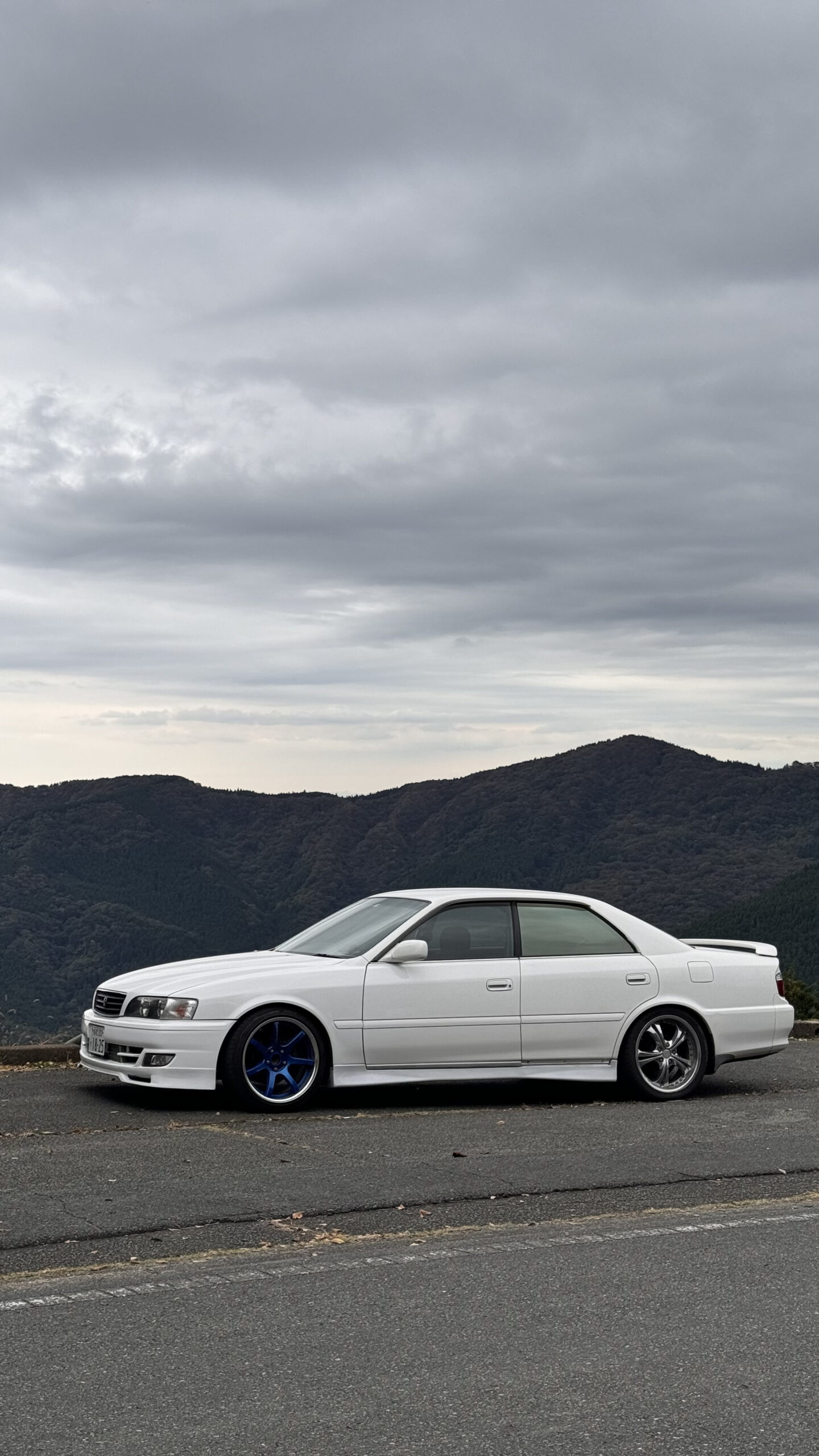
I’m 24. I work a regular office job. And I drive a 2000 JZX100 Chaser with a swapped turbo engine and a 5-speed manual through the streets of Tokyo every day.
This is what that’s actually like.
Why This Car
I didn’t choose the 1JZ. The 1JZ chose me.
Growing up, my family had a JZX110 for about twenty years. That car took me everywhere — and somewhere along the way, watching drift events from the back seat, I fell completely in love with that engine. The sound, the torque, the way it pulls. When the time came to buy my own car, I wasn’t looking for anything else. I found my Chaser and that was it.
Mine is a Tourer S on paper, but the previous owner had already swapped in a turbo engine and a 5-speed manual — basically a Tourer V in everything that matters. Everything else was stock when I got it.
What I’ve Spent Money On
The biggest single hit was the differential. The Tourer S and Tourer V have very different diff setups, and swapping it out properly isn’t cheap. But I wanted to drift, so that’s where the money went.
I can drift now. That chapter is done. The next chapter is making it look the part.
Monthly costs, roughly:
- Parking: ¥17,500
- Insurance: ¥10,000
- Fuel: ¥20,000
- Car inspection (shaken): ¥100,000 every two years — budget accordingly
Driving in Tokyo
The expressway is everything. Blasting through one of the world’s great cities in a machine that was built to do exactly this — there’s nothing like it. The 1JZ doesn’t care that it’s 2026. Neither do I.
The daily reality is less romantic. Manual transmission in Tokyo traffic is genuinely annoying. Stop-and-go on the expressway on-ramps, narrow parking structures, summer heat. Nobody tells you this part.
And the car is over 20 years old. Even sitting still it finds new ways to need attention. I’ve learned to just keep talking to it. Don’t break. Not today.
How People React
Japanese reactions: 90% bad, 10% incredible.
The 10% is worth it. When another enthusiast walks over, looks at the engine bay, and just nods — that’s the whole thing right there.
The foreign reaction is completely different. Tourists and foreign car fans who see the car treat it like a piece of art. That’s not an exaggeration. JDM culture has spread to the point where a guy from Poland or the US or Australia sees this car and genuinely feels something. That never stops being surreal and gratifying.
The Scene, From the Inside
I go to Daikoku, Tatsumi, Shinonome. I talk to people. And over time, something has become clear to me: foreign car fans aren’t just curious — they’re invested. They’ve grown up with Initial D, with Gran Turismo, with YouTube build videos. JDM culture isn’t just cars to them. It’s art. It’s identity.
That’s why I built JDM Pilgrim. I want to be part of that. I want to push it forward.
Parts and Wrenching
For used parts: Up Garage and Yahoo Auctions are the go-to. Beyond that, it’s about who you know. The best shops aren’t found on Google — they’re found through introductions. Make friends in the scene first.
On the legal side: I run an ECV (Exhaust Control Valve) to manage sound levels when needed. Know the rules, know your car, and know when to keep it quiet.
If You Want One
My honest advice to any foreigner thinking about buying a JZX100 in Japan: go in ready to refresh everything. Rubber, fluids, seals — assume it all needs to be done. These cars are old and they will find ways to remind you of that. But if you’re serious about it, nothing comes close.
1JZ is super duper lit. That’s the most honest thing I can tell you.
JDM Pilgrim is written by a Tokyo-based JZX100 owner who grew up in Japan’s car scene. All spot guides and cultural content come from years of firsthand experience — not from a travel blog.
コメントを残す